






1. Sun and Hair Transplant: An Important, Often Underestimated Precaution
Summer is now a very popular time to undergo a hair transplant in Nice. Holidays, a calmer pace, and the opportunity for a peaceful recovery encourage many patients to take the plunge during the summer season.
However, a question frequently arises after the procedure:
“Can I expose my head to the sun after the transplant?”
The answer is simple: after a hair transplant, the scalp must be protected from direct sunlight during the healing phase.
This doesn't mean you have to stay indoors all summer, but simply adopt the right habits to protect the grafts and scalp during the first few weeks.
2. Why Does the Scalp Become More Sensitive After a Transplant?
After a hair transplant in Nice, the scalp naturally goes through a recovery phase.
The skin temporarily remains more fragile, more sensitive, and more reactive to external aggressions, including:
- sun exposure
- intense heat
- friction
- sunburn
- excessive sweating
Freshly implanted grafts need a stable environment to heal properly.
3. The Real Risk: Sunburn on the Grafted Area
The problem isn't summer itself, but rather direct sun exposure without protection.
Sunburn on a recently transplanted area can lead to:
- significant irritation
- scalp inflammation
- more uncomfortable healing
- increased redness
- prolonged sensitivity
This is why it is strongly recommended to properly protect your scalp after a hair transplant in France, especially during summer.
4. Nice and the South of France: Sun is a part of everyday life
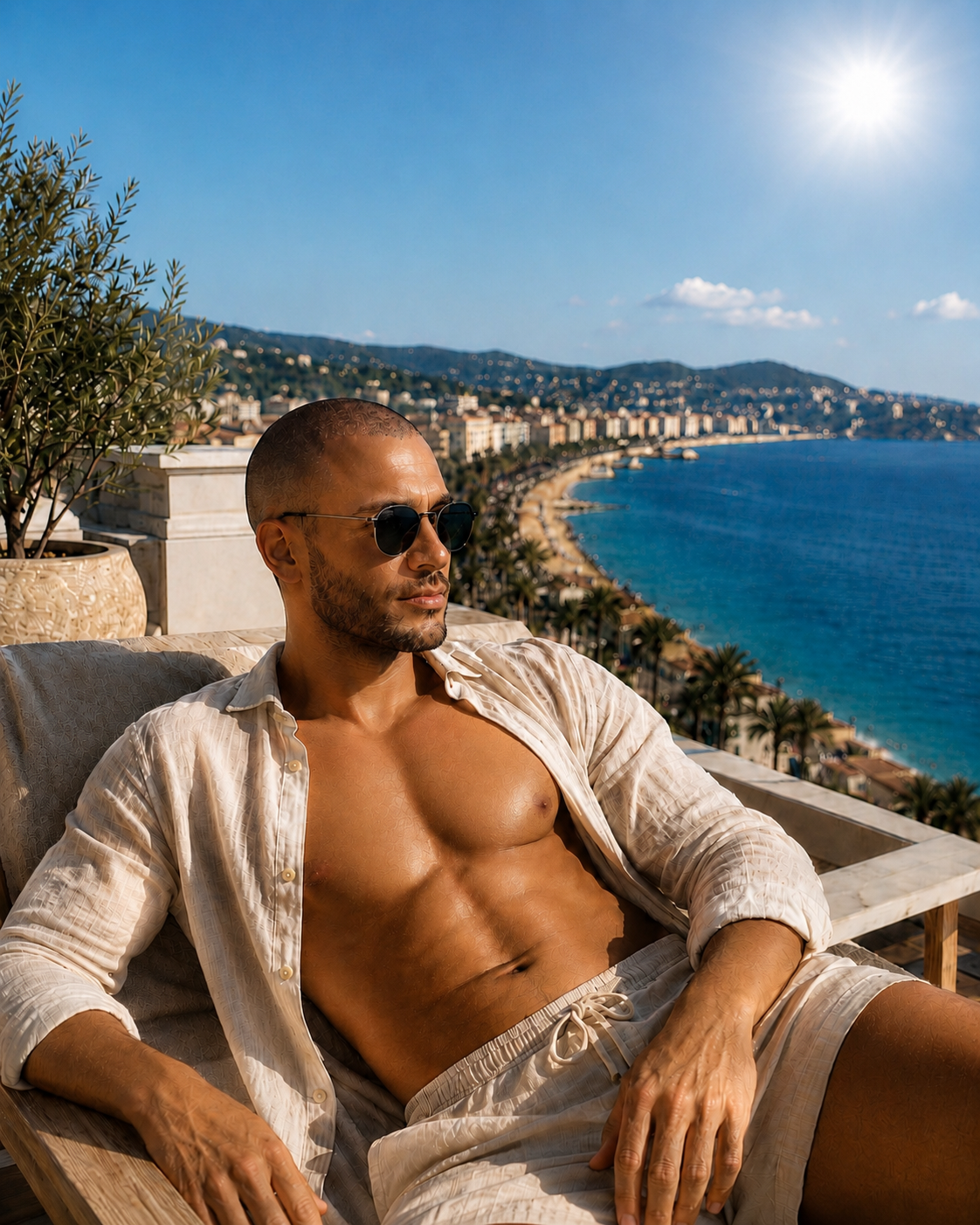
At Hexagone Clinic in Nice, patients have their hair transplant in a region where the sun is present for much of the year.
The Mediterranean climate is naturally part of the local lifestyle.
The post-transplant recommendations are therefore tailored to this reality: the goal is not to completely avoid the sun, but to learn how to intelligently protect the scalp during the recovery period.
5. How to properly protect your head after a hair transplant?
Once approved by the medical team, it is generally advised to:
- wear an appropriate cap or a light hat
- avoid prolonged sun exposure
- seek shaded areas during the first few weeks
- avoid prolonged intense heat initially
- follow the post-operative care instructions provided by the clinic
These simple steps generally allow you to enjoy a completely normal summer after a hair transplant in Nice.
6. Can you go to the beach after a transplant?
Yes, but with some temporary precautions.
After a hair transplant, patients can gradually resume their summer activities, provided they properly protect the implanted area.
At the beach, it's especially important to avoid:
- prolonged direct sun exposure
- sunburn
- sand on the grafted area
- swimming too soon
Recovery should remain gradual during the first few weeks.
7. Why very sunny countries also perform transplants year-round
Some people still believe it would be "bad" to have a hair transplant in the summer.
However, the largest countries performing hair transplants are often very hot countries:
- 🇧🇷 Brazil
- 🇹🇷 Turkey
- 🇦🇪 United Arab Emirates
- 🇺🇸 Miami
- 🇲🇽 Mexico
Thousands of patients undergo transplants there all year round.
The key, then, is not to avoid summer, but to properly follow sun protection recommendations.
8. Can the sun prevent grafts from growing?
No.
Grafts follow their natural healing and regrowth cycle regardless of the season.
However, excessive exposure without protection can irritate the scalp and make recovery more uncomfortable.
That's why specialists primarily recommend protecting the skin during the initial post-transplant phase.
9. Important but temporary protection
One of patients' frequent concerns is the duration of these precautions.
In reality, this phase is temporary. After the initial healing period, patients gradually resume a completely normal life, even in summer.
The goal is simply to properly support the first few weeks after the hair transplant in Nice.
10. Hexagone Clinic: recovery tailored to patients' real lives
At Hexagone Clinic, Dr. Claire Sabatier-Cabrol and Dr. Henry Sabatier guide patients with clear, realistic recommendations suited to their daily lives.
The goal is not to create unnecessary restrictions, but to help each patient properly protect their scalp to optimize recovery and comfort after the transplant.
Frequently Asked Questions (FAQ)
Can you expose your head to the sun after a hair transplant?
It is recommended to avoid prolonged direct exposure during the first few weeks following the procedure.
Why should you protect your scalp after a transplant?
The scalp is temporarily more sensitive after the procedure and needs to heal properly.
Can you wear a cap after a hair transplant?
Yes, according to the recommendations provided by the medical team and after the initial graft protection phase.
Can you get a hair transplant in the summer in the South of France?
Yes, absolutely. Transplants are performed year-round in Nice, with precautions adapted to the sunny climate.
In conclusion
Getting a hair transplant in Nice in summer remains perfectly compatible with a normal summer lifestyle. The essential point is primarily to properly protect the scalp during the first few weeks following the procedure.
With a few simple and appropriate precautions, patients can enjoy their summer with peace of mind while properly supporting the healing of their hair transplant.
📞 Don't hesitate to contact us for a consultation and start your journey towards renewed hair!