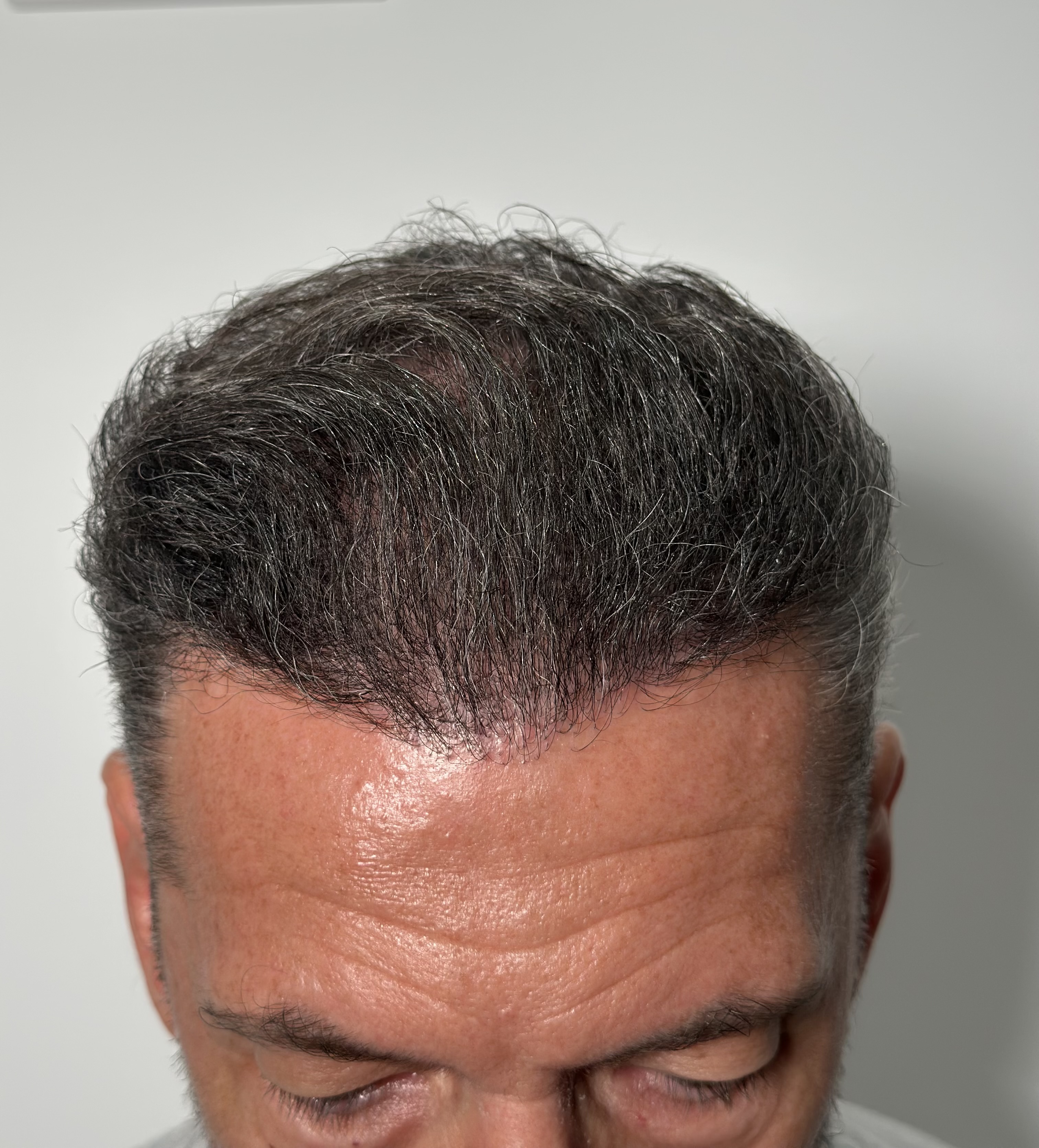





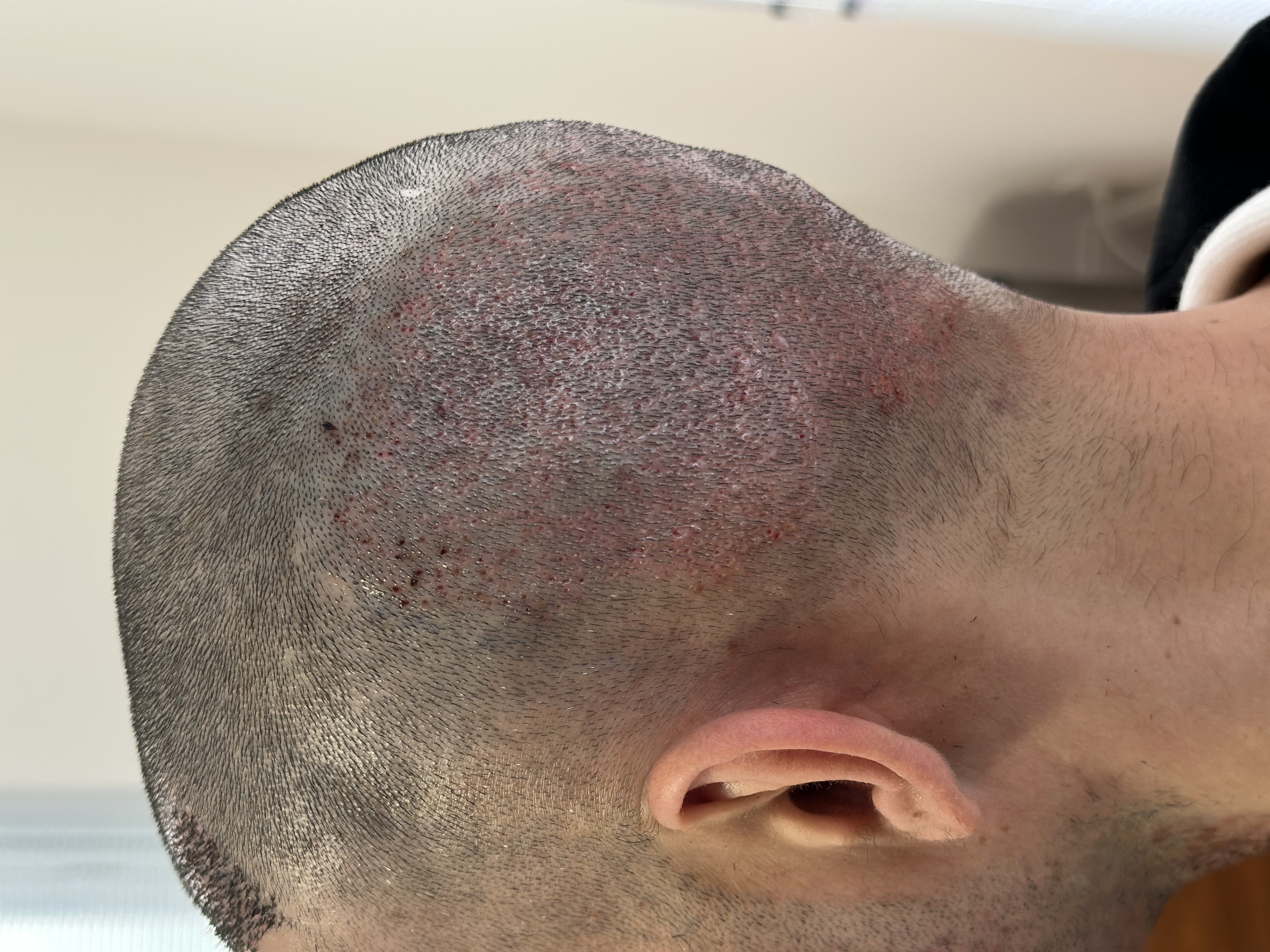


1. The donor area: the most important element of a hair transplant
When a patient considers a hair transplant in Nice, they often focus on the area that has lost hair: the temples, the hairline, the crown, or areas of low density.
However, the true starting point of a successful transplant lies elsewhere: the donor area.
It is this area that provides the follicles necessary for the procedure. Without a quality donor area, even the best techniques for hair transplant in Nice cannot produce an optimal result.
This is why the analysis of this area is one of the most important steps during the hair assessment.
2. What is the donor area?
The donor area is typically the back and sides of the scalp.
These hairs have a crucial characteristic: they are naturally more resistant to the mechanisms responsible for androgenetic alopecia.
This resistance allows them to be harvested and then reimplanted into thinning areas.
After the transplant, these follicles generally retain their genetic characteristics, which explains their ability to regrow permanently in their new location.
3. Why not all patients have the same donor area
Contrary to popular belief, not everyone has the same hair capital.
Several factors influence the quality of the donor area:
- the natural hair density
- hair thickness
- hair color
- scalp quality
- the progression of alopecia
- patient age
Two people with exactly the same hair loss can have completely different transplant capacities depending on the richness of their donor area.
4. Density and number of grafts: what's the difference?
Patients often hear about grafts without always understanding what they represent.
A graft is a follicular unit containing one or more hairs.
During a hair transplant in Nice, the number of available grafts directly depends on the density of the donor area.
The higher this density, the greater the potential for harvesting.
However, the goal is never to harvest the maximum possible.
The objective is to preserve the natural appearance of the donor area while restoring density in the areas to be treated.
5. Why a donor area should never be over-harvested
One of the most common mistakes in the hair transplant field is harvesting too many follicles from a single area.
Over-harvesting can lead to:
- a loss of uniformity
- sparse areas
- an irregular appearance
- a reduction in future potential
Today, specialists in hair transplantation in Nice favor a much more conservative approach.
The goal is to sustainably preserve the patient's hair capital.
6. A good donor area does not necessarily mean immediate transplantation
Some patients have an excellent donor area but are not necessarily candidates for immediate intervention.
The decision also depends on:
- age
- the progression of alopecia
- the patient's expectations
- the stability of hair loss
The donor area represents a valuable asset that should be used wisely.
7. Do thick hairs offer an advantage?
Yes. Hair thickness strongly influences the final visual result.
Thick hair often provides more coverage than fine hair.
This means that two patients who have received the same number of grafts may achieve a different impression of density depending on the natural characteristics of their hair.
This is why the number of grafts alone is never enough to evaluate a hair transplant project in Nice.
8. Do curly or wavy hairs have an advantage?
In many cases, yes.
Wavy or curly hair naturally creates more visual volume.
This characteristic sometimes allows for a significant impression of density with a more moderate number of grafts.
Each hair type has its own specific characteristics and must be analyzed individually.
9. How is the donor area analyzed during a hair assessment?
Today, the evaluation is no longer based solely on simple visual observation.
At Hexagone Clinic in Nice, several parameters are studied:
- follicular density
- hair caliber
- scalp quality
- homogeneity of the donor area
- predictable progression of alopecia
This analysis helps establish a realistic and personalized strategy.
10. Why it's important to think long-term
A hair transplant should never be considered only for the next few years.
Alopecia can continue to progress.
That's why each project must take into account:
- the patient's age
- their family history
- the expected progression of hair loss
- the available reserves in the donor area
The goal is to maintain a harmonious balance in the long term.
11. Hexagone Clinic: a personalized approach to hair transplantation
At Hexagone Clinic, Dr. Claire Sabatier-Cabrol and Dr. Henry Sabatier pay particular attention to the analysis of the donor area before any decision is made.
Each patient receives a thorough evaluation to determine:
- their transplant potential
- realistic goals
- tailored solutions
- the most coherent long-term strategy
This approach allows for the creation of natural, durable, and situation-specific hair restoration plans.
Frequently Asked Questions (FAQ)
How do I know if my donor area is sufficient?
Only a complete hair assessment can accurately evaluate the density and harvesting potential.
Can you run out of grafts?
Yes. Depending on the progression of alopecia and initial density, the graft supply remains limited.
Can a donor area regrow after harvesting?
The extracted follicles are moved to another area. Therefore, they do not grow back in the exact spot where they were harvested.
Why is the donor area so important?
Because it is the main resource for performing a hair transplant and achieving a natural result.
In conclusion
When discussing hair transplant in Nice, attention often focuses on the balding areas. However, the true key to the project often lies in the quality of the donor area.
A precise analysis of this hair resource allows for the development of a coherent, sustainable strategy tailored to the patient's goals. This step largely determines the long-term success of a hair transplant.
📞 Feel free to contact us for a consultation and start your journey to renewed hair!