






Introduction
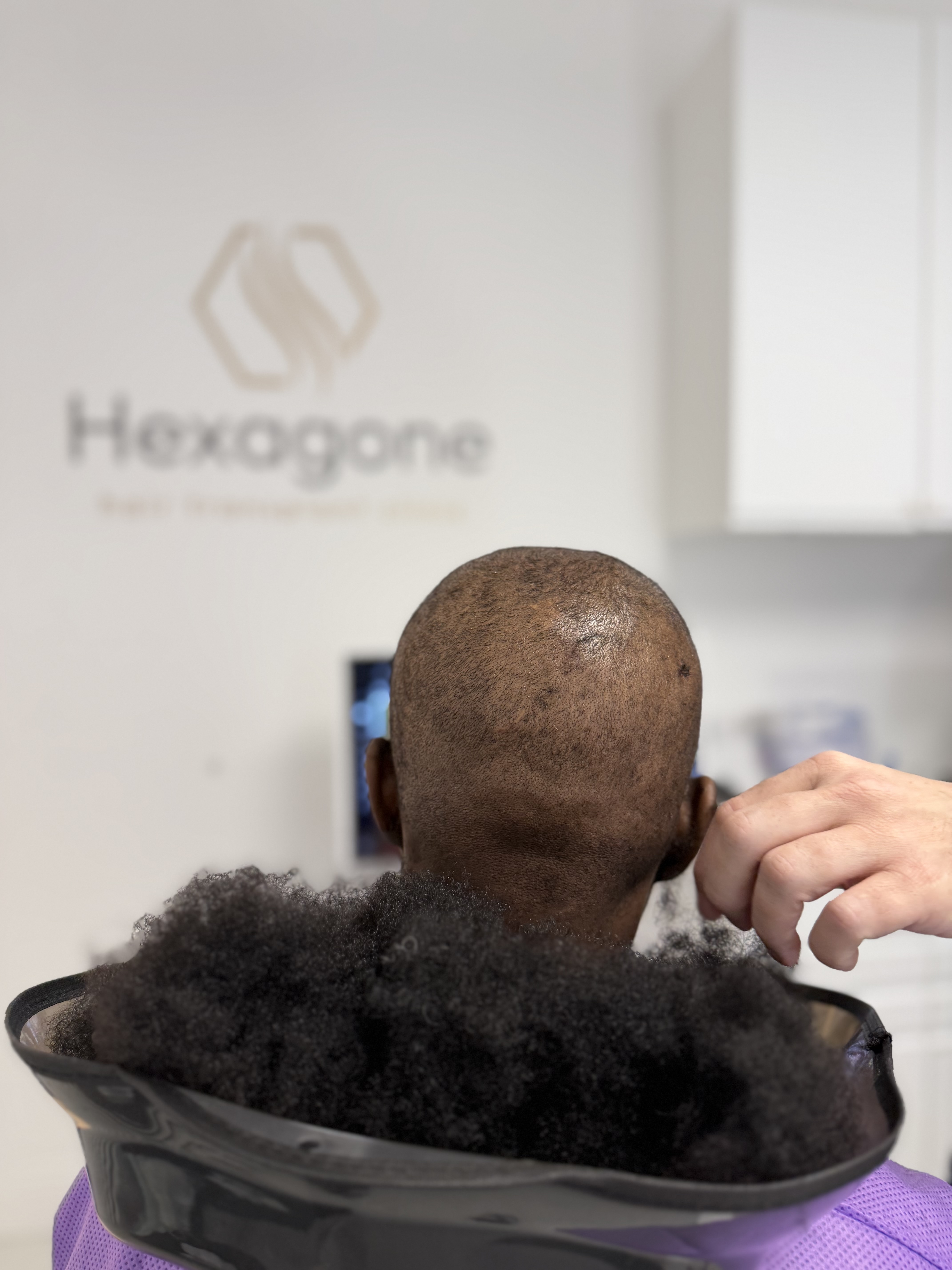
Hair loss can affect all hair types, but alopecia in patients with afro hair has important peculiarities. The structure of the hair, the shape of the follicle and certain specific causes of hair loss require careful medical analysis before considering a hair transplant in Nice.
For patients with curly or frizzy hair, hair transplantation requires an adapted technique and a great deal of experience on the part of doctors and practitioners. At a hair clinic in Nice such as Hexagone Hair Clinic, prior assessment makes it possible to determine the feasibility of the transplant and the most appropriate method.
1. Alopecia in patients with afro hair: sometimes different causes
Alopecia can have several origins in patients with afro hair.
In particular, we find:
🔹 Androgenetic alopecia
🔹 Traction alopecia
🔹 Cicatricial alopecia
🔹 Falls linked to scalp inflammations
Traction alopecia is common. It is often linked to repeated tight hairstyles, such as braids, locks, or extensions. Over time, these tensions can weaken the follicles and lead to progressive hair loss, especially in the temples and the forehead line.
💡 Before any hair transplant, doctors must precisely identify the type of alopecia in order to avoid an inadequate indication.
2. The particularity of the afro hair follicle
In patients with afro hair, the hair follicle has a different shape.
The hair is curly on the surface, but the follicle is also curved under the skin. This characteristic makes sampling more delicate during a hair transplant.
Unlike straight hair, the follicle does not grow in a straight line. It may be curved, which increases the risk of section during sampling if the technique is not controlled.
💡 This is why hair transplantation for patients with afro hair requires specific experience.
3. Afro hair transplant: a more demanding technique
Hair transplantation for patients with afro hair requires an adaptation of the technique, especially during FUE.
Practitioners should consider:
🔹 From the curvature of the follicle
🔹 The depth of implantation
🔹 Of the possible density
🔹 The natural orientation of the hair
💡 Improper extraction can damage follicles and reduce the rate of regrowth. During a hair transplant in Nice, doctors use adapted instruments and a progressive technique in order to preserve the grafts as much as possible.
4. The importance of diagnosis before a hair transplant
In patients with afro hair, not all hair loss can be corrected by a transplant.
Some scarring alopecia may require:
🔹 Pre-treatment
🔹 Stabilization of the disease
🔹 A wait before intervention
💡 The diagnosis also makes it possible to assess the donor area, which may be more or less dense depending on the patient. This step is essential to obtain a natural and lasting result.
5. The role of experienced doctors and practitioners
Afro hair transplantation requires a good knowledge of hair structure and implantation techniques.
Doctors and practitioners need to adapt:
🔹 The depth of the incisions
🔹 The angle of implantation
🔹 The distribution of the grafts
🔹 The final density
💡 Improper implantation may result in an unnatural or insufficient result. In a hair clinic, the experience of the team is an important factor for the success of hair transplantation for patients with afro hair.
6. Results of a hair transplant on afro hair
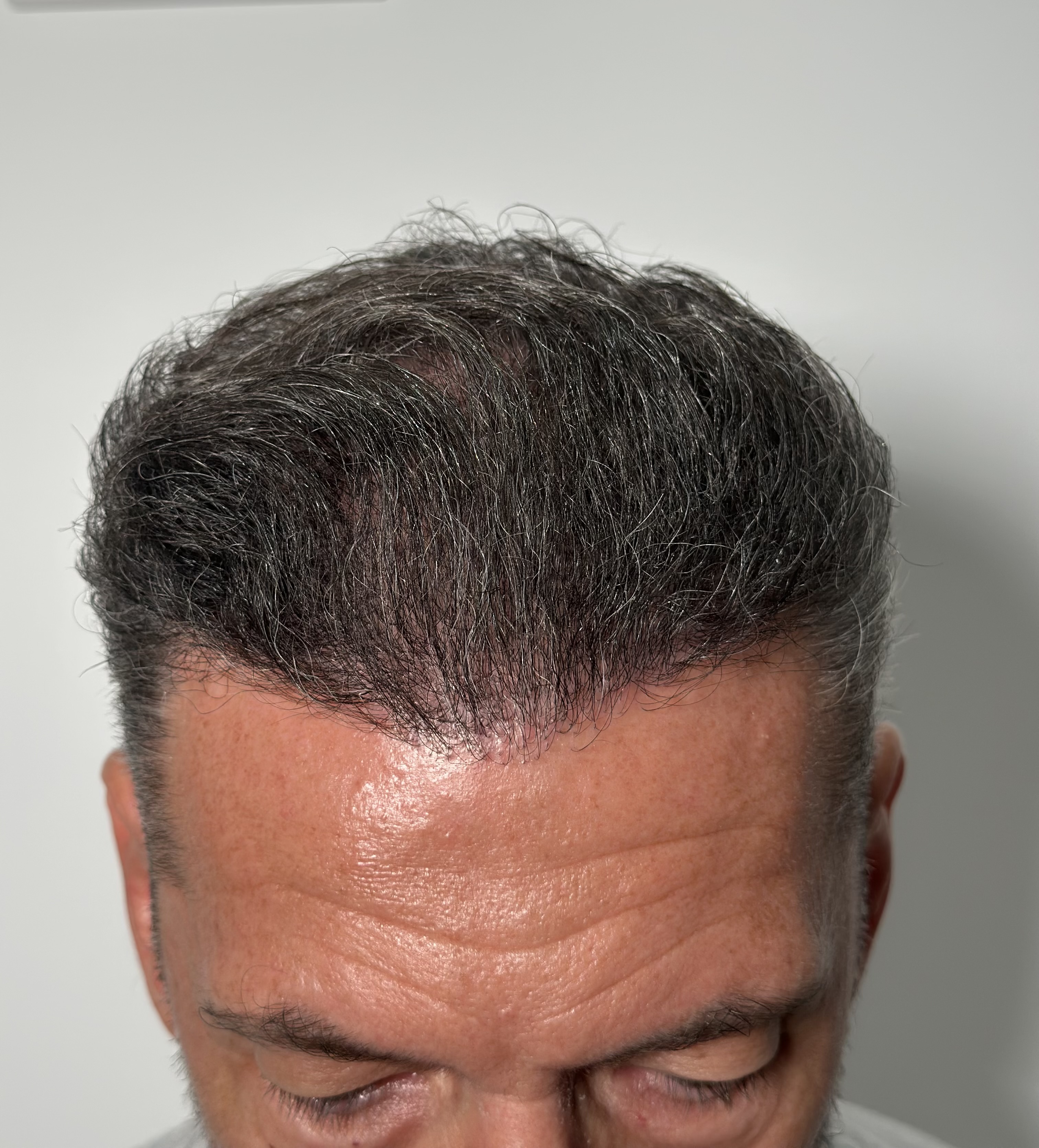
As with any hair transplant, the results appear gradually.
After the procedure:
🔹 Transplanted hair falls out in the first few weeks
🔹 The regrowth starts after a few months
🔹 The density is gradually increasing
🔹 The final result is estimated between 12 and 18 months
💡 The texture of afro hair often provides good visual coverage, even with moderate density.
Conclusion
Alopecia in patients with afro hair requires a specific approach before considering a hair transplant. The shape of the follicle, the possible causes of hair loss and the technique used make the procedure more demanding.
An evaluation by experienced doctors and practitioners, in a specialized hair clinic such as Hexagone Hair Clinic, makes it possible to adapt the technique and obtain a natural, lasting result that is consistent with the structure of the hair.
📞 Do not hesitate to contact us contact for a consultation and start your journey to renewed hair!