






1. When facing hair loss, shampoo is often the first go-to solution
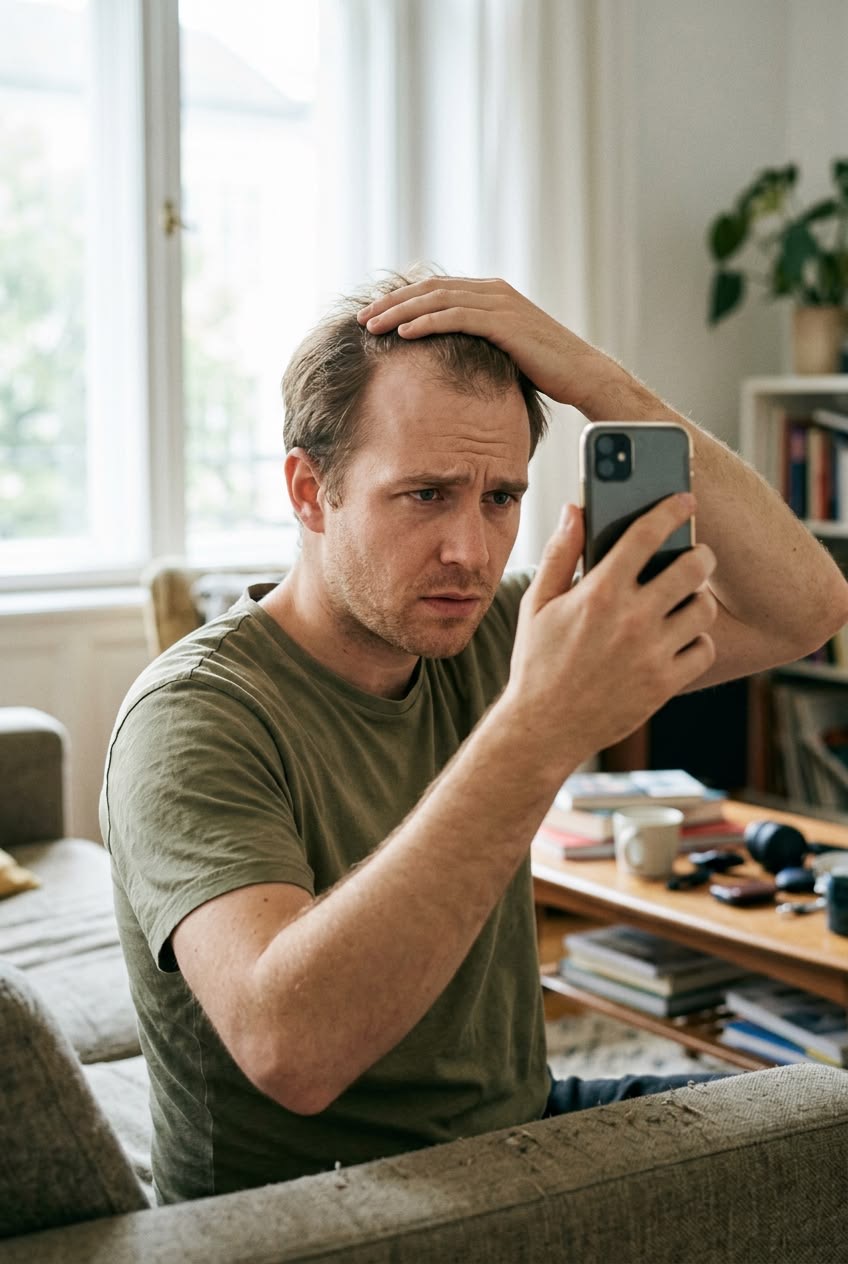
When a man or woman starts losing their hair, the first purchase is often an anti-hair loss shampoo.
Easily found in pharmacies, online, or in supermarkets, these products often promise:
- to slow down hair loss
- to strengthen hair
- to stimulate growth
- to restore density
- to improve the scalp
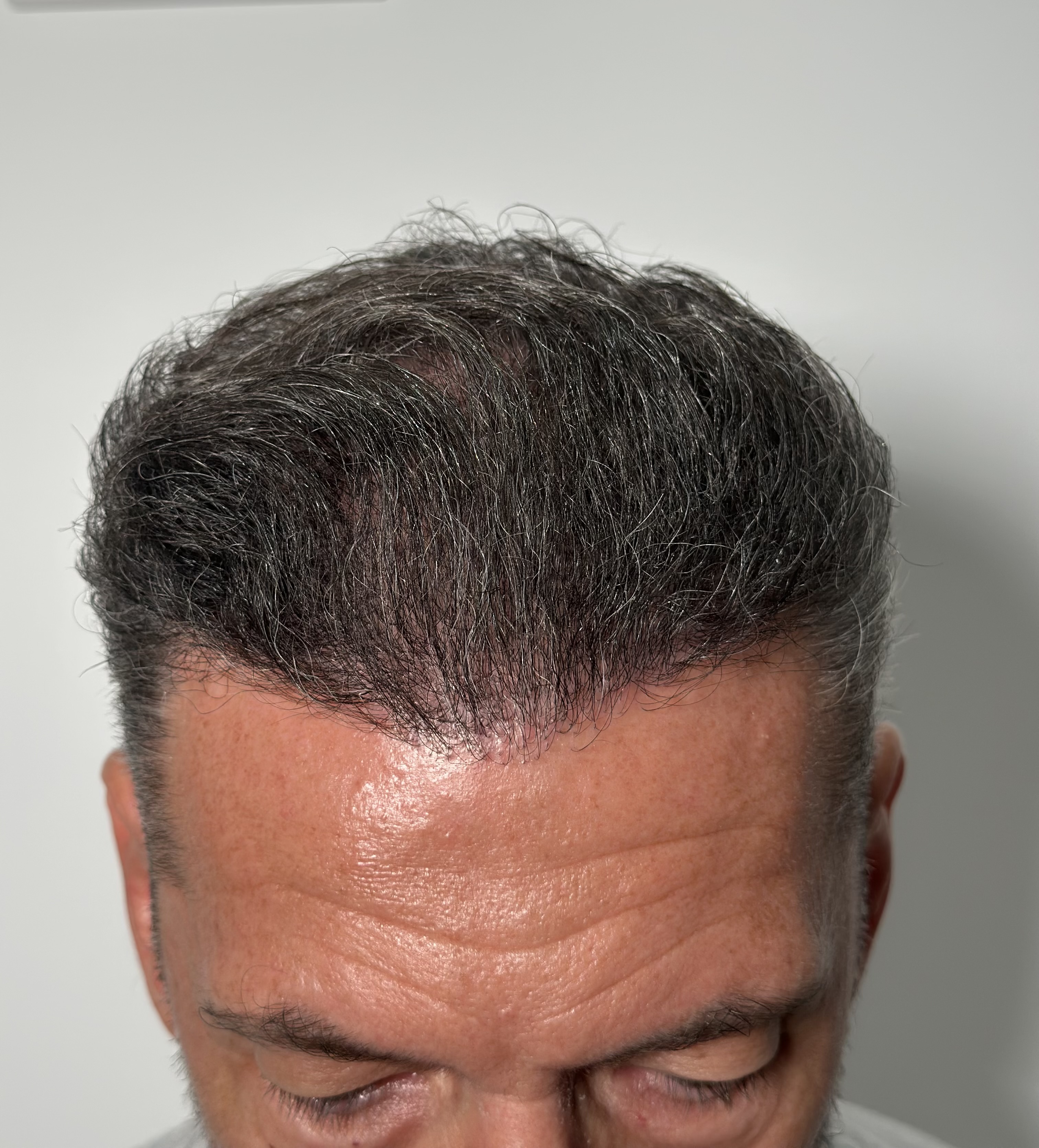
Given these promises, many patients hope to avoid more significant treatments or a future hair transplant in Nice.
But what's the reality?
Can an anti-hair loss shampoo truly treat alopecia?
The answer is more nuanced than it seems.
2. Why are anti-hair loss shampoos so popular?
The success of these products is easily explained.
They are:
- simple to use
- inexpensive
- available without a prescription
- integrated into the daily routine
For someone noticing the first signs of hair loss, they often represent a reassuring solution.
The problem is that many patients attribute capabilities to them that they don't possess.
3. The visible hair is not the real problem
To understand the limitations of a shampoo, one must first understand where the real problem lies in alopecia.
Hair loss does not begin on the surface of the scalp.
It starts at the hair follicle, several millimeters beneath the skin.
This is where hair miniaturization gradually occurs in androgenetic alopecia.
However, a shampoo only stays on the scalp for a few minutes before being rinsed off.
Its action therefore remains primarily superficial.
4. What an anti-hair loss shampoo can actually provide
Even if marketing promises are sometimes exaggerated, this doesn't mean that anti-hair loss shampoos are useless.
They can help to:
- improve scalp hygiene
- limit excess sebum
- reduce certain irritations
- improve scalp comfort
- give a feeling of stronger hair
A healthy scalp remains an important element in an overall hair strategy.
However, it's important to understand that these effects are different from a true treatment for alopecia.
5. What an anti-hair loss shampoo cannot do
This is where many misconceptions abound.
A shampoo cannot:
- recreate a lost follicle
- restore a hairline
- fill in receding temples
- replace a hair transplant
- stop advanced androgenetic alopecia on its own
No shampoo, even a very high-end one, currently possesses this ability.
It's a biological limitation, not a matter of brand.
6. Why some patients believe they see results
After a few weeks of use, some users feel their hair loss is decreasing.
Several reasons can explain this feeling:
- improvement in scalp condition
- reduction in hair breakage
- better cosmetic quality
- increase in visual volume
These improvements are real but do not necessarily mean that the alopecia has been stopped.
It's an important distinction.
7. The most common ingredients in anti-hair loss shampoos
Today, most anti-hair loss shampoos use active ingredients such as:
- caffeine
- biotin
- keratin
- zinc
- vitamins
- plant extracts
These ingredients can help improve the scalp environment or hair quality.
However, they do not have the ability to restore lost density in a balding area.
8. Why a diagnosis is more important than shampoo
At Hexagone Clinic in Nice, we regularly encounter patients who have tried several shampoos before consulting.
The problem is that not all types of hair loss are the same.
Loss can be linked to:
- androgenetic alopecia
- significant stress
- hormonal imbalance
- certain deficiencies
- a scalp condition
Without an accurate diagnosis, it's impossible to know which solution will truly be suitable.
9. The Role of Shampoo After a Hair Transplant
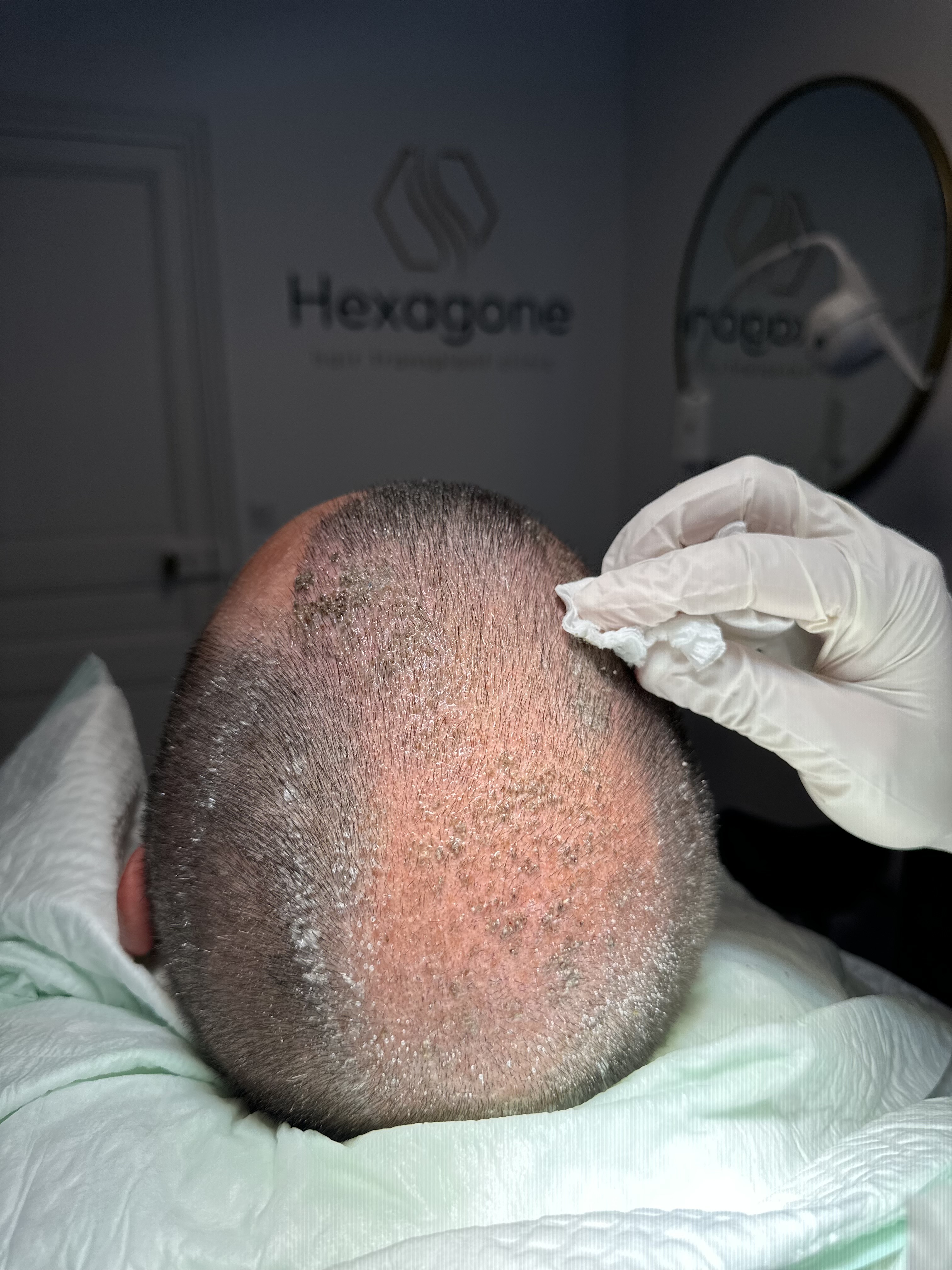
After a hair transplant in Nice, shampoos also play an important role.
During the post-operative phase, specific protocols are used to:
- gently cleanse the scalp
- support healing
- protect the grafts
- gradually remove scabs
The choice of shampoo must therefore follow the medical team's recommendations.
10. Shampoo or Hair Transplant: Two Completely Different Goals
This is probably the most important point.
A shampoo primarily acts on:
- the scalp
- the hair fiber
- patient comfort
A hair transplant in Nice, on the other hand, allows for the recreation of density through the implantation of new follicles.
The two approaches therefore do not pursue the same objective.
11. Hexagone Clinic: prioritizing solutions tailored to each situation
At Hexagone Clinic, Dr. Claire Sabatier-Cabrol and Dr. Henry Sabatier take the time to precisely evaluate each hair condition.
The objective is to identify:
- the cause of the hair loss
- its progression
- the quality of the scalp
- the relevant treatments
- the potential benefit of a hair transplant
This approach helps avoid wasting time with unsuitable solutions.
Frequently Asked Questions (FAQ)
Can an anti-hair loss shampoo regrow hair?
No. It can improve the condition of the scalp but does not recreate lost follicles.
What is the best shampoo for androgenetic alopecia?
No shampoo alone can completely stop androgenetic alopecia.
Can a shampoo replace a hair transplant?
No. A hair transplant can recreate density where follicles have disappeared.
Are anti-hair loss shampoos useless?
No. They can contribute to overall scalp health but should be seen as a supplement, not a standalone solution.
In conclusion
Anti-hair loss shampoos can improve scalp condition and contribute to a good hair care routine. However, they should not be seen as a solution capable of replacing medical treatment or a hair transplant in Nice when hair loss becomes significant.
Understanding their limitations helps set realistic expectations and build a hair care strategy tailored to your situation.
📞 Feel free to contact us for a consultation and start your journey towards renewed hair!