






1. The crown of the head is often the last area to lose hair… but also one of the most complex to restore.
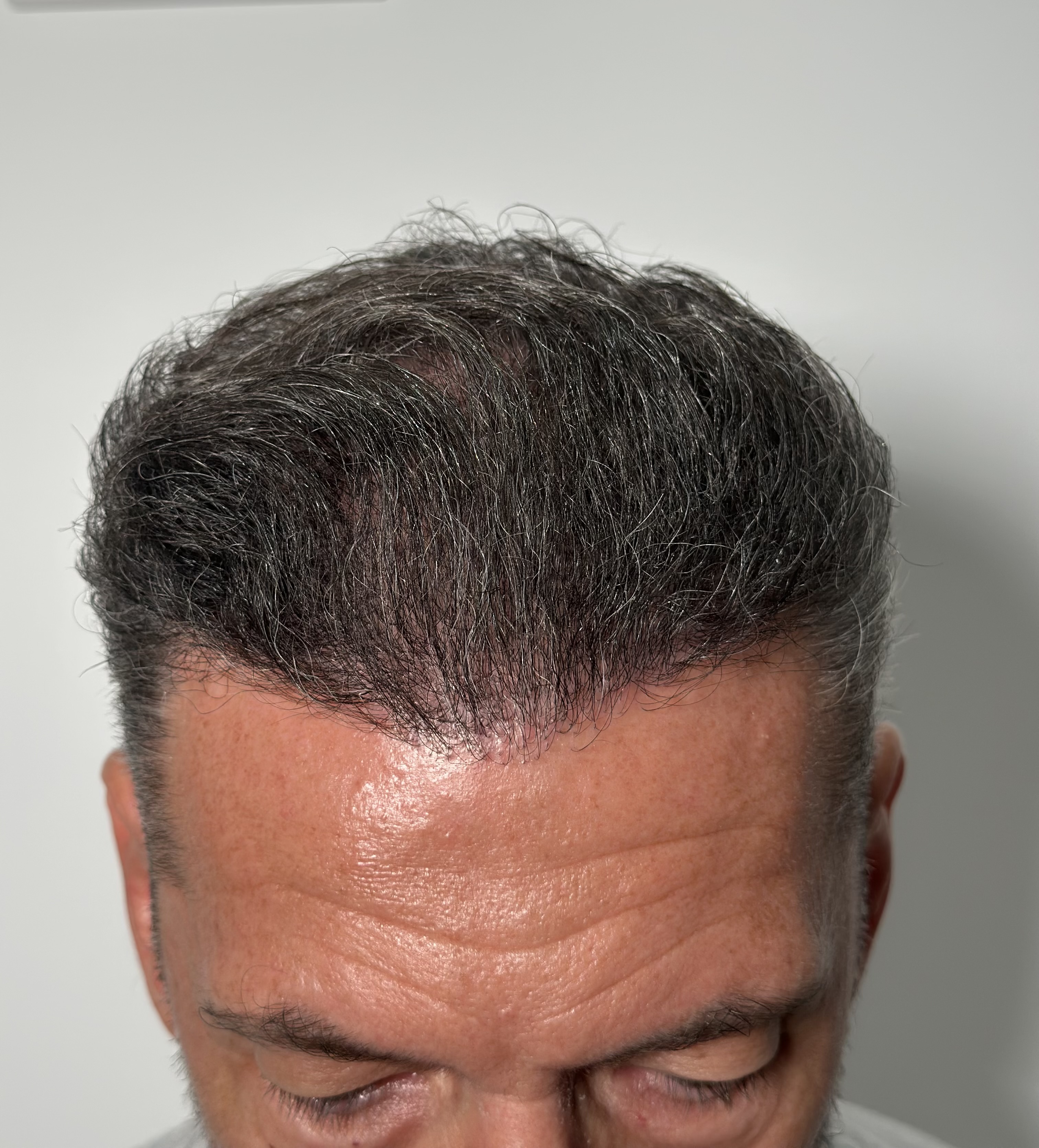
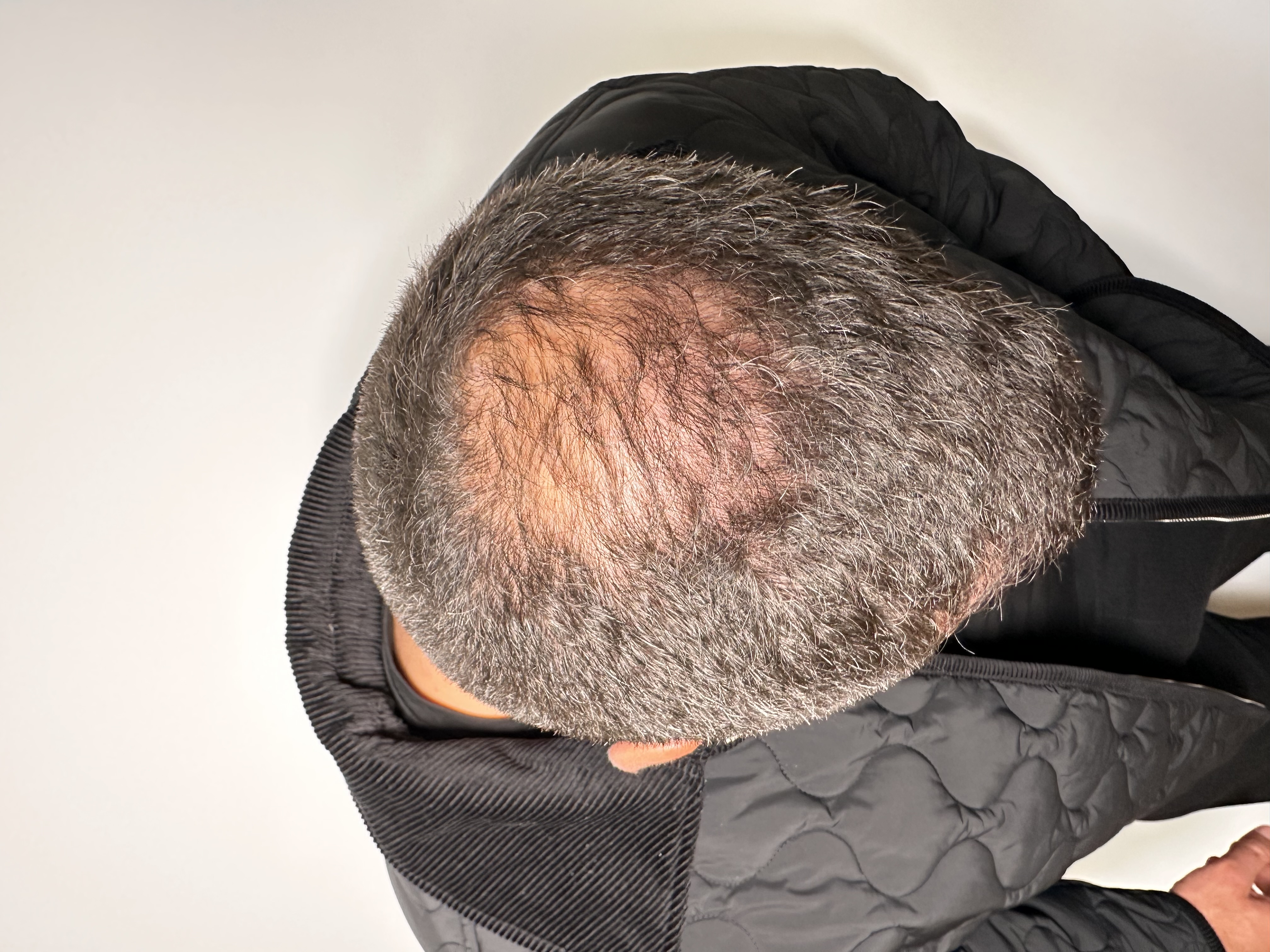
When discussing a hair transplant in Nice, most patients immediately think of the hairline or receding temples. However, another area concerns a great many people: the vertex, also known as the crown of the head or the bald spot.
For some patients, hair loss begins at the temples before gradually extending towards the vertex. For others, however, it's this area that starts to thin first.
In all cases, a question very often arises during consultation:
Why is the vertex more difficult to treat than a hairline?
The answer lies in several anatomical, aesthetic, and technical factors that make the crown of the head a particularly demanding area for hair transplantation.
2. The vertex has a very unique natural hair growth pattern
Unlike the hairline, where hair almost all grows in the same direction, the vertex exhibits a much more complex organization.
The hair there naturally forms a circular pattern, called a whorl or spiral. This natural growth pattern is unique to each individual.
During a hair transplant in Nice, it is therefore essential to respect this orientation to achieve a harmonious result.
An incorrect implantation angle can quickly lead to an artificial appearance, even if the density is satisfactory.
3. An area often larger than imagined
When patients look at their crown in a mirror, they frequently underestimate its actual size. In reality, this area often covers a significant surface. The more hair loss progresses, the more grafts are needed.
It is then necessary to find the best balance between:
🔹 the desired density;
🔹 the donor area's reserves;
🔹 other areas that might require a graft in the future.
This is precisely the discussion that takes place during the consultation.
4. The crown often continues to evolve over time
Androgenetic alopecia is a progressive condition. In many patients, the crown continues to gradually lose density for several years. This is why it's essential not to analyze only the current situation, but also its probable evolution.
During the consultation, several factors are examined:
🔹 the patient's age;
🔹 family history;
🔹 the rate of alopecia progression;
🔹 the stability of hair loss.
This long-term perspective allows for the creation of a coherent and sustainable plan.
5. Why the crown often requires more grafts
A common mistake is to think that all areas of the scalp require the same number of grafts. However, the crown is unique.
Its circular shape and natural hair growth pattern often require a very precise distribution of follicles. The goal isn't just to cover a surface. It's also essential to recreate the natural movement of the hair so that the result remains discreet from all angles.
This step requires particularly meticulous planning.
6. Density perception differs at the crown of the head
The crown is an area constantly exposed to light. When light comes from above, the scalp can appear more visible, even in individuals who still have good hair density.
Several factors influence this perception:
🔹 hair thickness;
🔹 hair color;
🔹 hair texture;
🔹 contrast with the skin;
🔹 light direction.
This is why two patients who received the same number of grafts can have a different visual impression.
7. Not all hair loss at the crown requires a transplant
A thinning crown does not automatically mean that an intervention is necessary. Before any decision, it is essential to identify the cause of the hair loss.
Certain situations may be linked to:
🔹 androgenetic alopecia;
🔹 reactive hair loss;
🔹 hormonal imbalance;
🔹 certain scalp conditions.
At Hexagone Clinic, each patient receives a personalized assessment to determine if a hair transplantis truly the best solution.
8. Why a Hair Assessment is Essential Before a Vertex Transplant
The crown is likely the area that requires the most foresight. Before any procedure, several parameters are analyzed through a clinical examination and a 3D hair scanner :
🔹 current density;
🔹 hair miniaturization;
🔹 the quality of the donor area;
🔹 the probable progression of alopecia;
🔹 available reserves for the future.
This analysis helps establish a realistic and personalized treatment plan.
9. A Multi-Year Strategy
A hair transplant should never be considered solely to address the visible problem today.
The crown is often an area that continues to evolve. It is therefore essential to preserve the available grafts to be able to support the patient long-term if needed.
At Hexagone Clinic, each project is considered with this long-term vision to preserve the overall harmony of the hair.
10. Why Choosing a Specialized Clinic is Particularly Important
Addressing hair loss at the crown requires genuine expertise. It relies as much on thorough analysis as on the implantation technique. A comprehensive consultation specifically allows us to:
🔹 precisely evaluate the potential of the donor area;
🔹 understand the patient's expectations;
🔹 define a realistic goal;
🔹 develop a long-term strategy.
This stage is the foundation for a hair transplant in Nice successful.
Frequently Asked Questions (FAQ)
Why is the crown more difficult to treat?
Because hair naturally grows in a spiral pattern there, and this area often continues to evolve over time.
Does a crown transplant require more grafts?
In many cases, yes. The surface area to cover is often significant and requires a very precise distribution of grafts.
Are the results as natural as on the frontal hairline?
Yes, provided that we respect the natural hair growth direction and adapt the strategy to each patient.
How do I know if my crown truly requires a transplant?
A specialized consultation combined with a scalp analysis allows us to determine if a transplant is indicated or if another approach is preferable.
In conclusion
The crown is one of the most complex areas to treat in hair transplantation in NiceIts natural growth pattern, gradual development, and sometimes significant surface area require a particularly rigorous approach.
Therefore, a personalized consultation, combined with a precise analysis of the scalp and donor area, is essential for creating a tailored, natural, and lasting hair restoration plan.