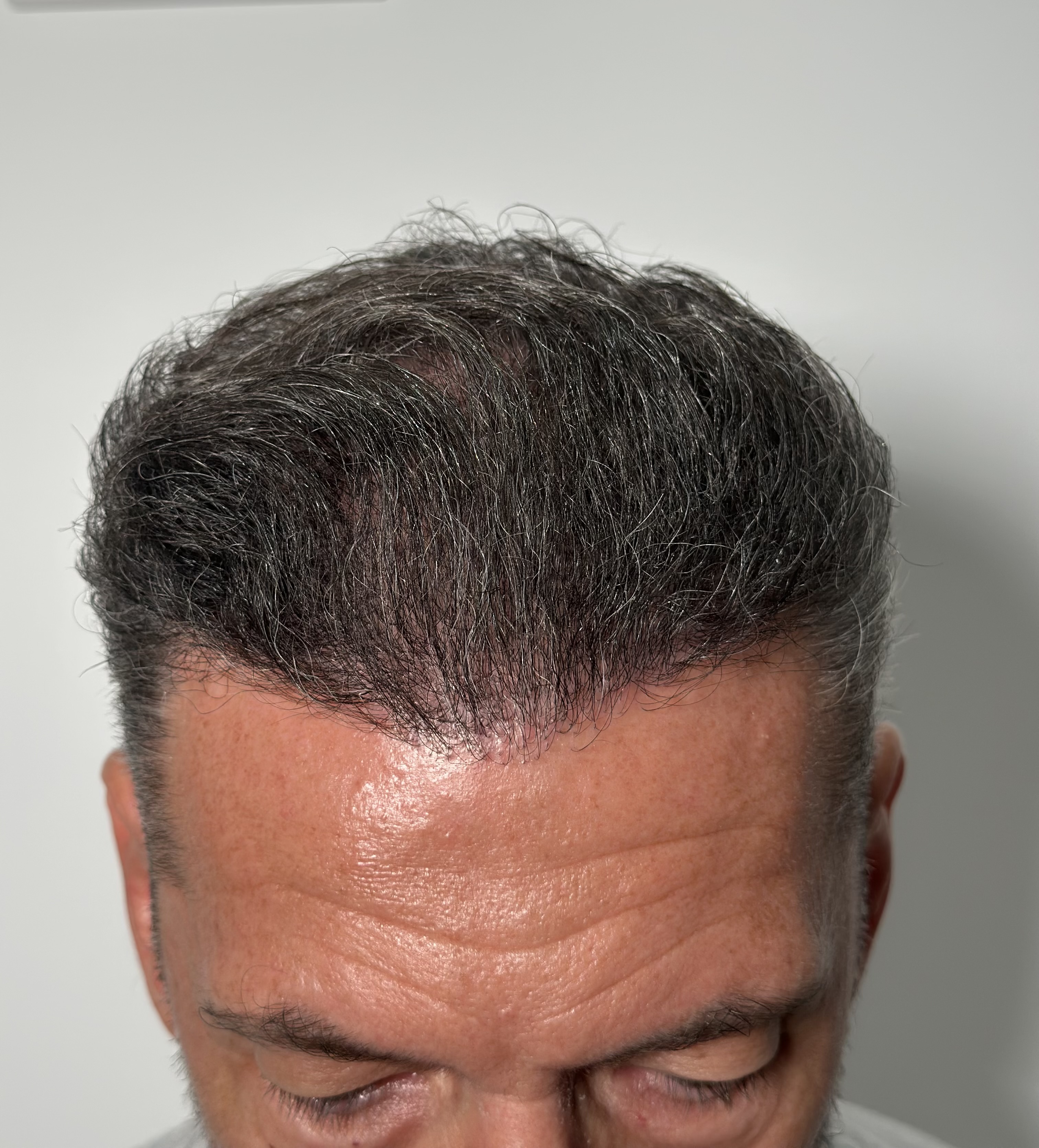








1. Many patients often wait too long
When hair loss begins, most patients have the same instinct: to wait.
Initially, the signs sometimes seem subtle:
- more hair in the shower
- slight loss of density
- receding temples
- scalp more visible under light
Then, gradually, the situation progresses. And it's often at this point that patients schedule a hair consultation.
At Hexagone Clinic in Nice, a phrase often comes up during consultations:
“I should have dealt with it sooner.”
However, today there are many solutions to manage hair loss even before considering a hair transplant in Nice.
2. Hair loss usually progresses gradually
Androgenetic alopecia, which is the most common cause of hair loss in men and also in some women, often progresses slowly.
This gradual progression explains why many patients don't immediately realize the significance of the hair changes.
The problem is that the longer follicles thin, the harder they become to preserve.
It is precisely for this reason that early hair treatment can be particularly beneficial.
3. Why acting early often makes a big difference
Today, hair treatments are not just for "regrowing hair."
The main goal is often:
- to slow down the progression of hair loss
- to preserve existing hair
- to improve hair quality
- to stabilize alopecia
- to delay a potential hair transplant
The earlier a patient acts, the more treatment options they generally have.
4. Not all patients immediately require a hair transplant
This is a very common misconception.
A hair transplant in Nice is not always the first solution offered.
In many cases, a medical strategy or complementary treatments can be considered before a procedure.
Everything depends particularly on:
- the stage of alopecia
- the patient's age
- the stability of hair loss
- the quality of the donor area
- of the remaining density
A consultation helps determine the most suitable strategy.
5. The most common hair loss treatments today
The field of hair care has evolved significantly in recent years. Today, several solutions can be offered depending on the patient's profile.
Among the frequently used treatments:
- Minoxidil
- oral treatments by medical prescription
- Hair PRP
- scalp treatments
- hair stimulation protocols
- personalized support based on the type of alopecia
Each patient has a different situation. Therefore, there is no universal treatment that is the same for everyone.
6. The scalp also plays an important role
Today, specialists no longer focus solely on the hair itself.
The condition of the scalp is also carefully analyzed:
- excess sebum
- inflammation
- dandruff
- chronic irritation
- dryness
- skin sensitivity
An unbalanced scalp can sometimes further weaken existing hair.
That's why modern consultations are becoming much more comprehensive than before.
7. Why Patients Are Now Seeking a Holistic Approach
Expectations have changed enormously in recent years.
Today, patients are no longer just looking for:
- "a transplant"
- "a miracle cure"
- "more density"
Above all, they are looking for:
- an accurate diagnosis
- a long-term strategy
- personalized follow-up
- solutions tailored to their hair's progression
- a natural result
This holistic approach allows for a much more coherent and realistic treatment plan.
8. The Importance of a Hair Assessment Before Any Treatment
Before suggesting a treatment or a hair transplant in Nice, it is essential to precisely understand the patient's situation.
At Hexagone Clinic, the consultation primarily allows us to evaluate:
- the type of alopecia
- scalp quality
- hair density
- the stability of hair loss
- the condition of the donor area
- the patient's medical history
A 3D hair scanner can also be used to obtain a more precise analysis of the hair and scalp.
This step helps in developing a truly personalized strategy.
9. Why some patients delay their consultation
Hair loss remains a sensitive topic for many men and women.
Some patients delay due to fear:
- of being told they will go bald
- of needing a transplant
- of discovering advanced hair loss
- of others' judgment
However, consulting early often helps preserve more hair and leads to more effective treatment.
10. Hair treatments require patience
This is an extremely important point.
Hair follows a slow biological cycle. Hair treatments therefore usually require several weeks or months before visible progress can be observed.
Consistency often remains the most important factor in a hair treatment strategy.
11. Hexagone Clinic: A Personalized Approach to Hair Health
At Hexagone Clinic in Nice, Dr. Claire Sabatier-Cabrol and Dr. Henry Sabatier guide patients with a comprehensive approach to hair loss.
The goal is not to systematically propose an intervention, but to precisely analyze the situation in order to guide the patient towards the most suitable strategy:
- medical treatment
- complementary care
- monitoring progress
- hair transplant if necessary
Each treatment plan is personalized according to the patient's profile and objectives.
Frequently Asked Questions (FAQ)
Should one wait before treating hair loss?
No. The earlier treatment begins, the more often it's possible to preserve existing hair.
Do all patients need a hair transplant?
No. Some patients may benefit from medical or complementary treatments before considering a transplant.
Do hair loss treatments really work?
Some treatments can help slow the progression of alopecia and preserve existing hair.
Why get a hair assessment?
Because it's essential to precisely identify the origin and progression of hair loss before offering a suitable solution.
In conclusion
Today, many solutions exist to address hair loss even before considering a hair transplant in Nice.
What's most important is often to act early enough to preserve existing hair and build a coherent, progressive, and personalized hair strategy.
📞 Feel free to contact us for a consultation and start your journey towards renewed hair!