






1. PRP has become one of the most requested hair treatments
In recent years, hair PRP has seen a real surge in popularity. Online, in the media, or on social networks, it is often presented as an innovative solution for hair loss.
Many patients who consult for a hair transplant in Nice have already heard of PRP or are considering a few sessions before taking the plunge.
But one question consistently arises:
Can PRP truly replace a hair transplant?
As with Minoxidil, the answer is more nuanced.
PRP is a very interesting tool in certain situations, but it also has biological limitations that are important to understand before starting treatment.
2. What is hair PRP?
PRP stands for Platelet-Rich Plasma.
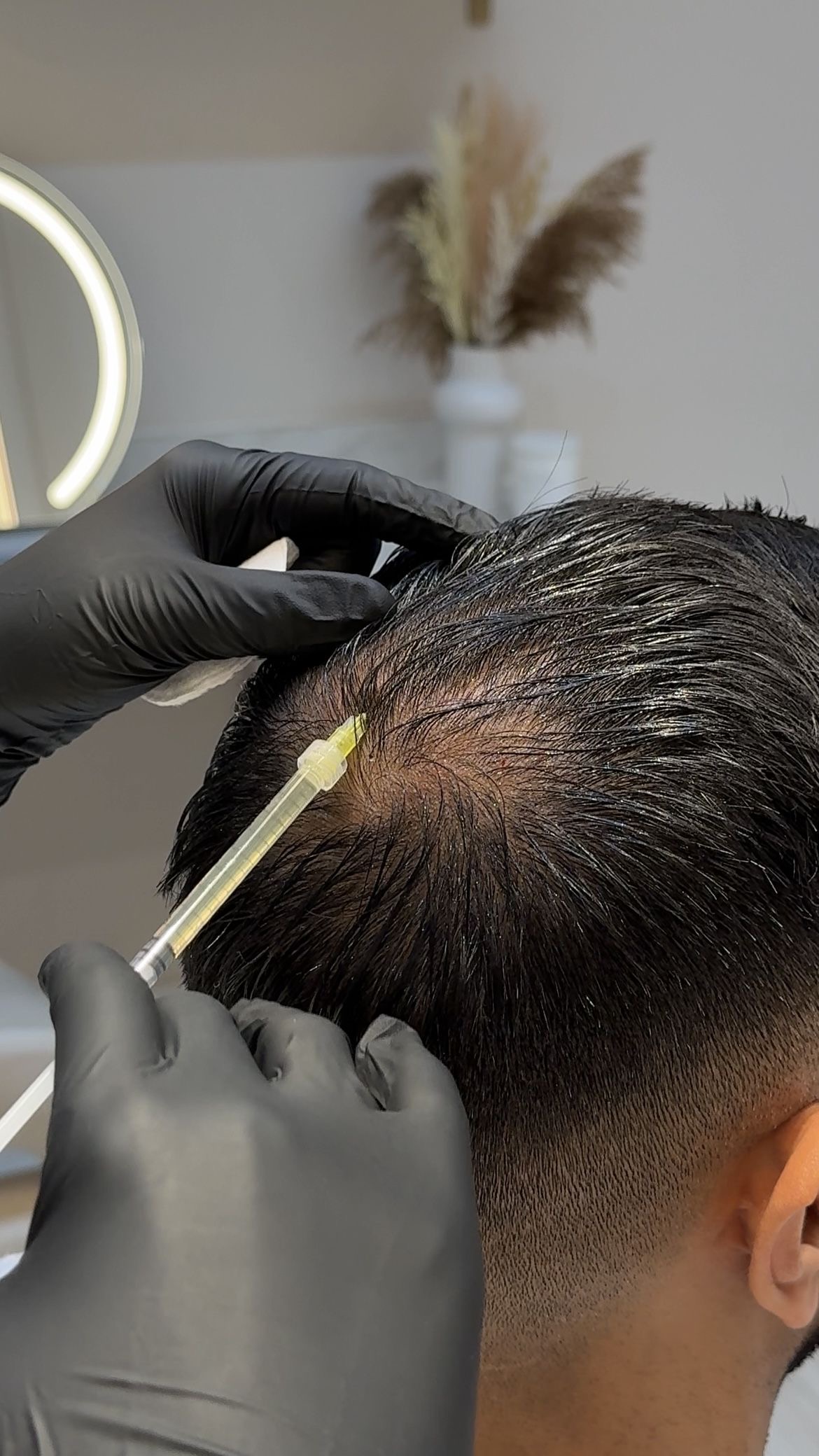
The treatment is based on a relatively simple principle: a small amount of blood is drawn from the patient then centrifuged to isolate a portion particularly rich in platelets and growth factors.
This preparation is then injected directly into the scalp.
The goal is to improve the environment of existing hair follicles and enhance scalp health.
Unlike a hair transplant in Nice, PRP does not implant any new follicles.
This is a fundamental difference that patients need to be aware of.
3. Why is PRP so widely used for hair treatment?
PRP's success stems from several advantages.
The treatment is:
- minimally invasive
- performed in-office
- quick to perform
- non-surgical
- based on the patient's own cells
Many patients also appreciate the idea of using their own growth factors rather than a drug-based treatment.
This approach particularly appeals to individuals who want to address their hair loss early.
4. Does PRP actually regrow hair?
This is probably the most important question.
The reality is that PRP primarily acts on existing follicles.
When a follicle is alive but weakened, PRP can help improve its environment and support its activity.
However, when an area has been completely bald for several years, PRP cannot recreate a lost follicle.
This is exactly the same biological limitation found with other medical treatments.
An absent follicle cannot be recreated by an injection.
This is why PRP does not replace a hair transplant in Nice when significant hair loss has already occurred.
5. Why do some patients see good results?
Indeed, some patients notice an improvement after several sessions.
This is often because the affected hairs are still present but weakened.
PRP can then help to:
- improve the quality of existing hair
- enhance visual density
- improve certain scalp parameters
- support still-active follicles
The best results are generally observed when treatment is initiated relatively early.
The more alopecia progresses, the more limited the options become.
6. Is PRP effective for receding temples?
This is one of the most frequent expectations.
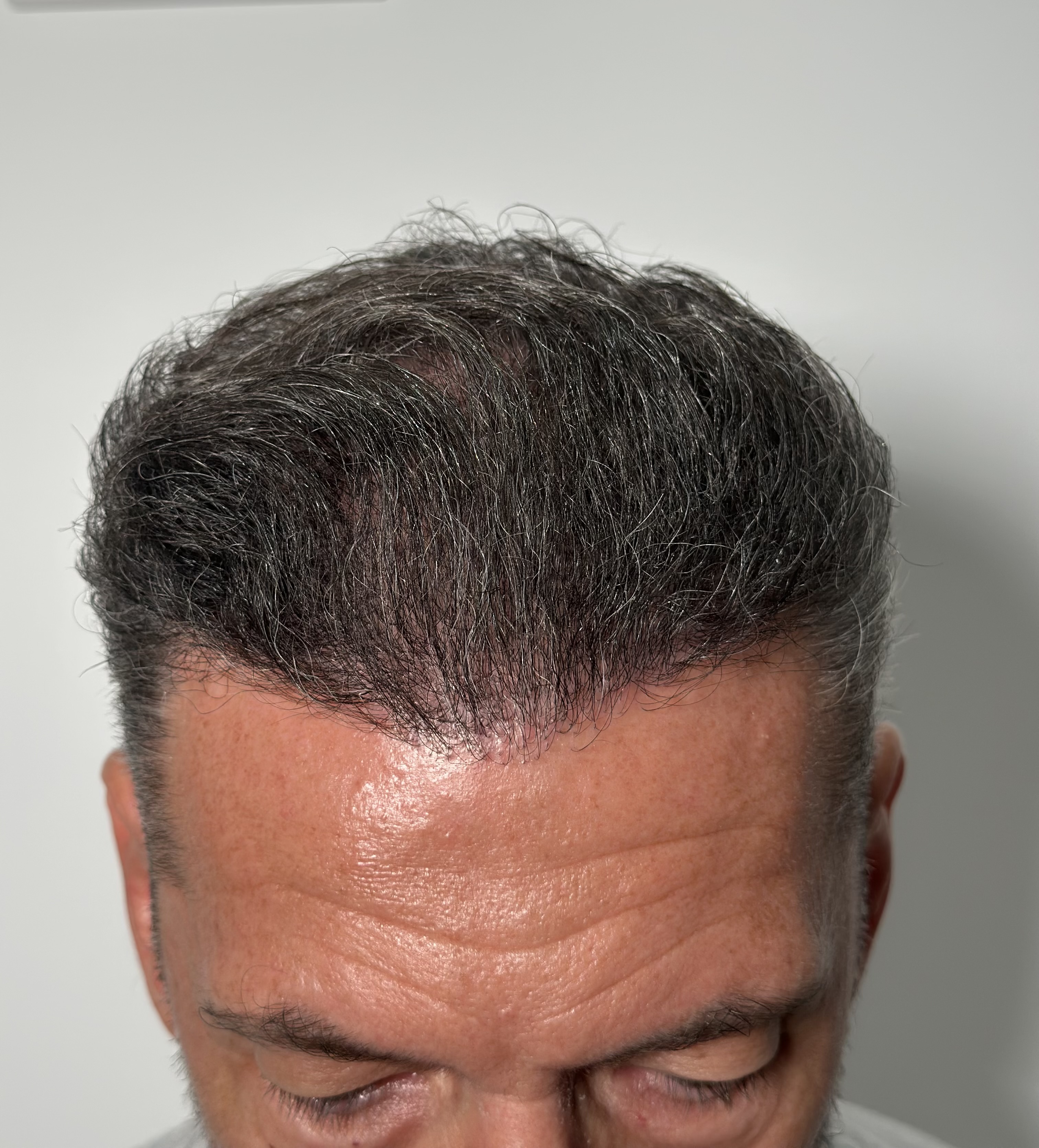
Unfortunately, when an area is completely devoid of functional follicles, PRP generally cannot recreate a hairline or fill in already receding temples.
In these situations, the solution often remains the hair transplant in Nice, which involves reimplanting actual follicles taken from the donor area.
PRP can then act as a complement, but rarely as a standalone solution.
7. Why we use PRP as a complement to an overall hair strategy
At Hexagone Clinic, PRP is often considered a complementary tool.
The goal is not to replace hair transplantation but to support existing hair.
In certain situations, PRP can be integrated:
- before a transplant
- after a transplant
- as part of ongoing hair care
- to support non-transplanted hair
This approach allows for the development of a more comprehensive and coherent long-term strategy.
8. PRP after a hair transplant: what's the benefit?
After a hair transplant in Nice, transplanted hair will gradually follow its natural growth cycle.
However, the natural hair around the grafts also continues to evolve.
PRP can then be considered to support this existing hair and maintain overall harmony between the different areas of the scalp.
It is in this context that many patients are interested in PRP after their procedure.
9. How many sessions are needed?
There is no universal answer.
The number of sessions depends:
- the type of alopecia
- its progression
- the patient's age
- the desired objectives
- the quality of existing hair
A customized protocol is always necessary.
10. Why a Hair Assessment Remains Essential
Today, many patients discover PRP online even before understanding the origin of their hair loss.
However, not all types of alopecia respond to treatments in the same way.
Before making any decision, it's essential to analyze:
- the type of hair loss
- the quality of the scalp
- the existing density
- the condition of the donor area
- the probable progression of the alopecia
At Hexagone Clinic in Nice, this step helps determine if PRP is truly relevant to the patient's treatment plan.
11. Hexagone Clinic: A Personalized Approach to Hair Treatments
At Hexagone Clinic, Dr. Claire Sabatier-Cabrol and Dr. Henry Sabatier develop strategies tailored to each situation.
The goal is never to offer a single treatment to all patients, but to precisely evaluate:
- existing hair
- density loss
- the patient's goals
- the most appropriate solutions
PRP can then find its place in a personalized treatment plan, often complementing other hair solutions.
Frequently Asked Questions (FAQ)
Does PRP regrow hair?
It can support existing follicles, but it does not recreate lost follicles.
Can PRP replace a hair transplant?
No. When an area is completely bald, a hair transplant generally remains the only solution to restore density.
Is PRP useful after a hair transplant?
Yes, in certain situations, it can be integrated into a comprehensive strategy to support existing hair.
How many PRP sessions are needed?
This depends on each patient and the goals defined during the consultation.
In conclusion
PRP is currently one of the most popular hair treatments. It can be a valuable tool for supporting existing hair and integrating into a comprehensive alopecia management strategy.
However, like Minoxidil, it has significant biological limitations. When an area is completely bald, PRP cannot replace a hair transplant in Nice.
Its role is often complementary: to preserve, support, and optimize the hair environment rather than recreating lost follicles.