






1. Dietary supplements, Minoxidil, PRP, mesotherapy… how effective are they really?
When a person starts losing their hair, they quickly discover many solutions presented as effective against hair loss.
Dietary supplements, Minoxidil, PRP, mesotherapy, anti-hair loss shampoos, hair oils, or even natural treatments: the options seem numerous and the promises sometimes impressive.
However, a biological reality often remains overlooked:
no treatment can recreate a hair follicle that has completely disappeared.
This concept is essential to understand the difference between medical treatments and a hair transplant in Nice.
At Hexagone Clinic, we regularly encounter patients who have tried several solutions for years before understanding this fundamental difference.
2. It all starts with the hair follicle
To understand the limitations of hair loss treatments, one must first understand what a hair follicle is.
The follicle is the structure located under the skin that produces hair.
Each visible hair on the scalp surface depends directly on the activity of its follicle.
As long as the follicle remains alive, various solutions can sometimes be considered to support its function.
However, when it disappears completely, the situation becomes entirely different.
3. Androgenetic alopecia gradually destroys follicles
Theandrogenetic alopecia is the most common cause of hair loss in men and a significant cause of hair thinning in women.
Its progression is usually gradual.
Initially:
- hair becomes thinner
- density decreases
- growth cycles shorten
Then, over time:
- miniaturized hairs become increasingly fragile
- some follicles gradually become inactive
- some areas become completely bald
This final stage is crucial.
4. Why treatments can work initially
When follicles are still present, even if weakened, several treatments can be beneficial.
For example:
- Minoxidil can support some active follicles
- PRP can improve the scalp environment
- mesotherapy can support the scalp
- some medical treatments can slow the progression of alopecia
The goal of these solutions is generally to preserve existing hair.
They are therefore used before the complete disappearance of the follicle.
5. The problem: a lost follicle can no longer be stimulated
This is where the limitation of all medical treatments lies.
Many patients hope to restore a receding hairline or fill in thinning temples with treatment.
Unfortunately, when a follicle has completely disappeared, there is no longer a structure capable of producing new hair.
No product can revive a root that no longer exists.
This is why some areas remain completely bald despite years of treatment.
6. Why before/after photos online can be misleading
Today, the internet is full of testimonials and impressive results.
The problem is that patients don't always know the initial situation.
In some cases:
- the follicles were still present
- the alopecia was in its early stages
- the hair was simply miniaturized
In these situations, treatment can sometimes improve the visual appearance of the hair.
However, when the scalp has been completely smooth and hairless for several years, the expected results are no longer the same.
7. Hair transplantation is based on a completely different logic
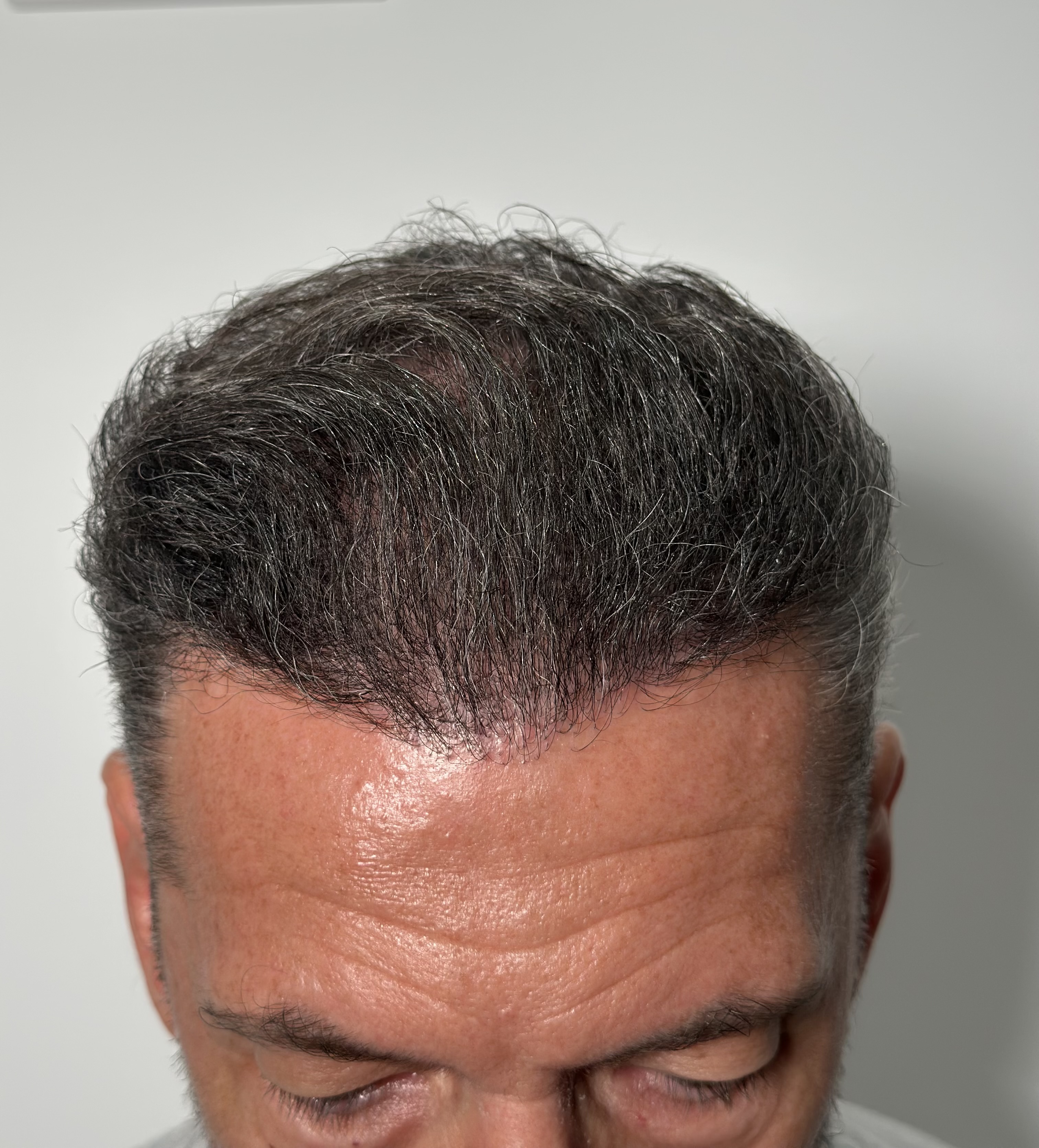
Unlike conservative treatments, the hair transplant in Nice does not seek to stimulate an existing follicle.
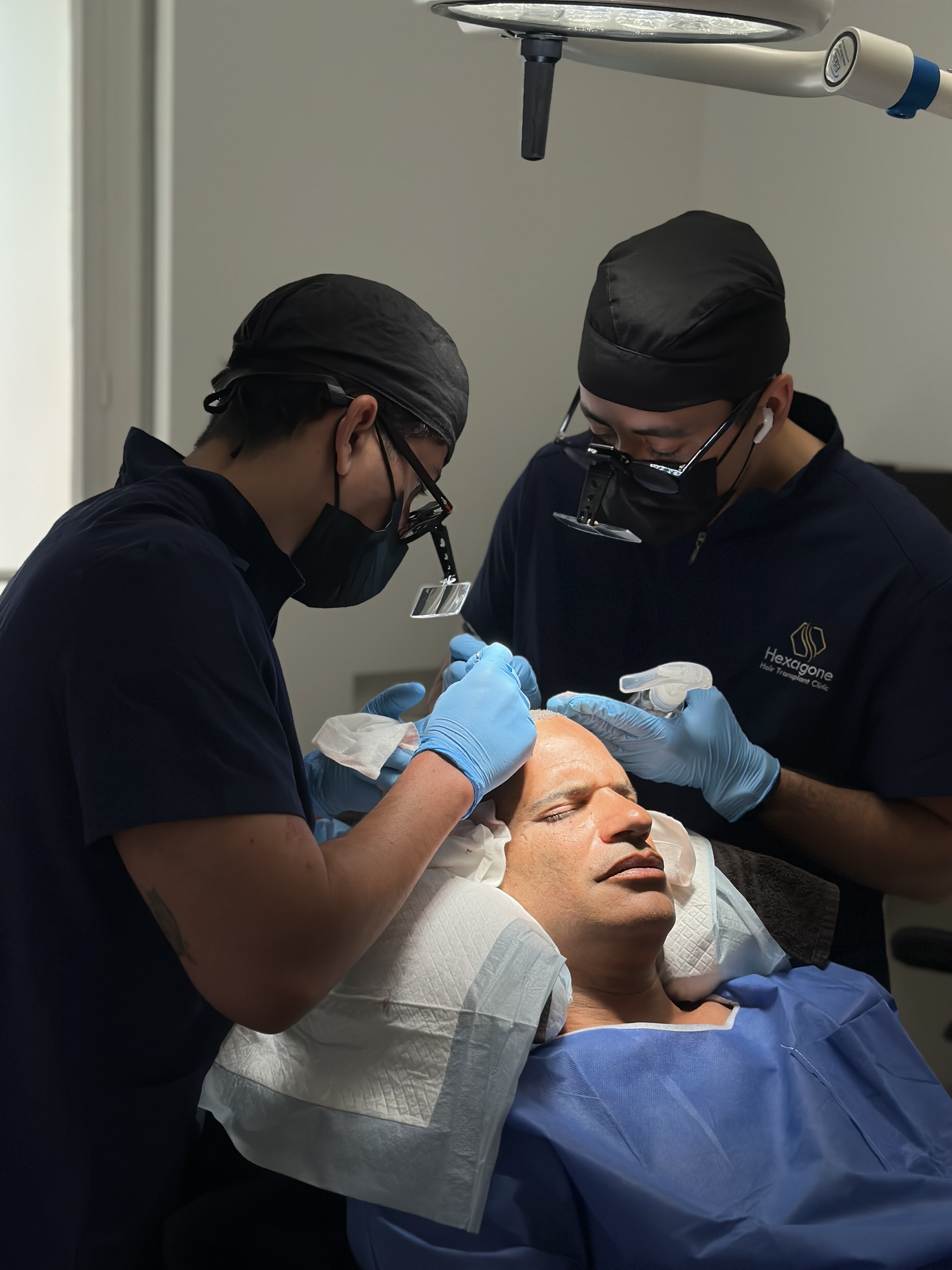
It involves extracting actual follicles from the donor area and reimplanting them into areas that have lost density.
This difference explains why a hair transplant can regrow hair where other treatments reach their limits.
A transplant doesn't try to save a lost follicle.
It replaces it.
8. Why some patients wait too long
At Hexagone Clinic, we regularly encounter patients who have tried numerous solutions for several years:
- vitamins
- dietary supplements
- hair oils
- specialized shampoos
- various treatments
In some cases, these solutions temporarily preserved some hair.
In others, they simply delayed a more appropriate treatment.
The goal isn't to criticize these treatments, but to understand what they can truly offer.
9. Preserving existing hair remains essential
Saying that a treatment doesn't replace a transplant doesn't mean it's useless.
On the contrary.
The natural hair you have today is a valuable asset.
That's why it's often still relevant to seek to:
- slow the progression of alopecia
- preserve existing density
- improve hair quality
- support the scalp
These approaches can perfectly complement an overall hair strategy.
10. A consultation helps you truly understand your situation
One of the most important questions is not:
"What is the best treatment?"
But rather:
"Are my follicles still present?"
This is precisely what a comprehensive hair assessment helps to determine.
At Hexagone Clinic in Nice, the analysis is based on:
- the condition of the scalp
- current density
- hair quality
- the donor area
- the probable progression of alopecia
This step helps determine if the objective should be:
- preserve
- stabilize
- treat
- or reconstruct through a hair transplant
11. Why Prevention Remains the Best Strategy
The earlier the intervention, the more options are available.
When follicles are still present, several options can be considered.
However, when they have been gone for a long time, the room for maneuver becomes more limited.
This is why specialists in hair transplant in Nice often recommend consulting at the first signs of density loss.
12. Hexagone Clinic: A Realistic and Personalized Approach
At Hexagone Clinic, Dr. Claire Sabatier-Cabrol and Dr. Henry Sabatier favor an approach based on an objective analysis of the hair situation.
The goal is not to promise miracles but to precisely determine:
- what can be preserved
- what can be improved
- what requires a hair transplant
Each strategy is tailored to the patient, their age, the progression of their hair condition, and their objectives.
Frequently Asked Questions (FAQ)
Can a lost follicle regrow naturally?
No. Once a follicle is completely gone, it can no longer produce hair.
Can Minoxidil restore a receding hairline?
No. It primarily acts on existing follicles.
Can PRP regrow hair on a bald area?
No. PRP supports existing follicles but does not recreate absent roots.
Why does a hair transplant work where other treatments fail?
Because it relies on the transfer of new follicles from the donor area.
In conclusion
Hair loss treatments play an important role in preserving existing hair capital. They can slow the progression of alopecia, improve hair quality, and support specific situations.
However, once a follicle is gone, no treatment can recreate it. This biological reality explains why the hair transplant in Nice remains today the only solution capable of permanently restoring density to a completely bald area.