






1. Is Minoxidil really the solution for hair loss?
When a person starts losing their hair, Minoxidil is often among the first solutions found online. Available as a spray or, in some cases, an oral treatment, it is now one of the most well-known treatments for hair loss.
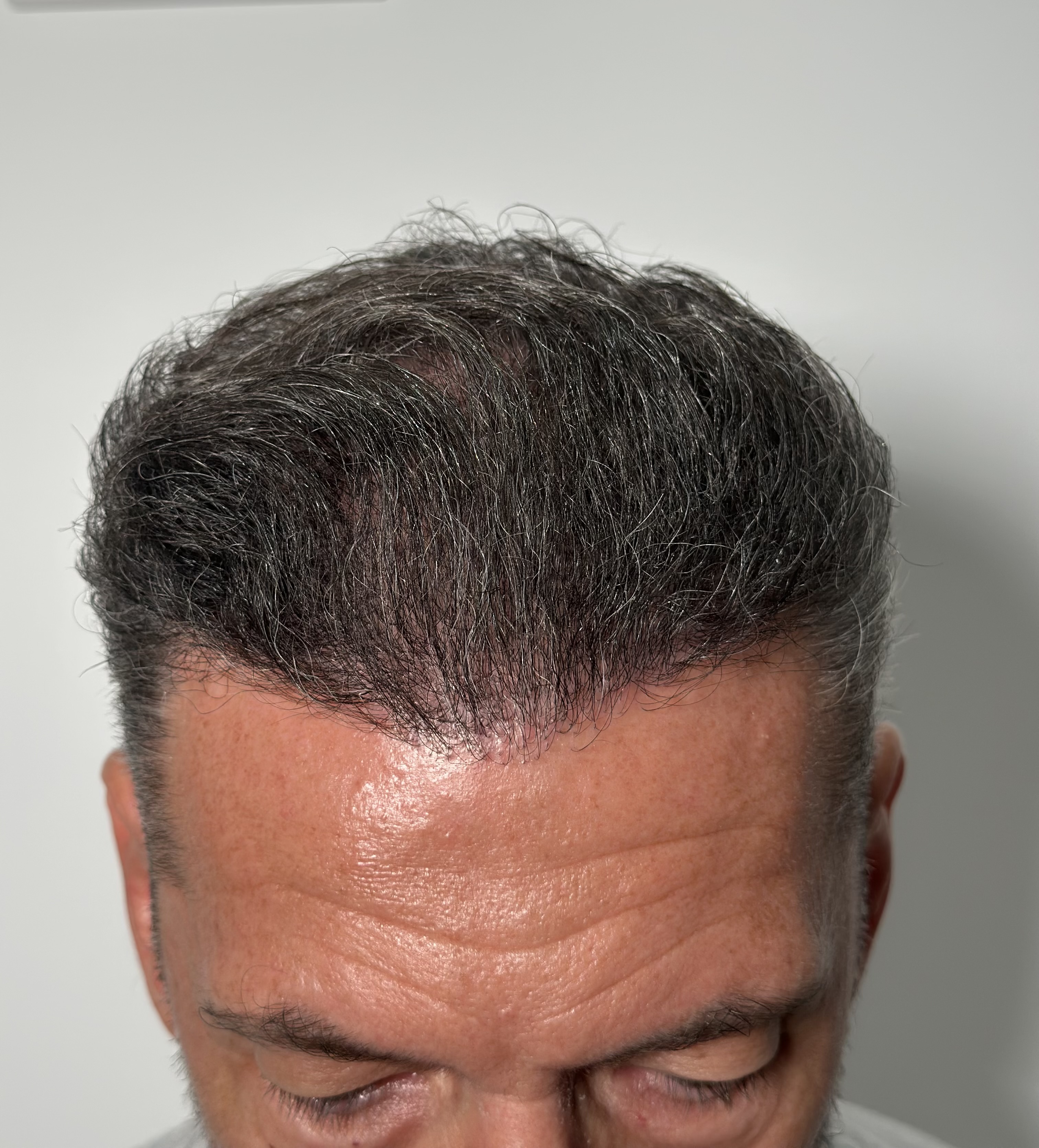
Many patients who consult for a hair transplant in Nice have already tried Minoxidil before making an appointment. Some have seen an improvement, while others have seen much less. This difference in results often raises many questions.
Does Minoxidil really work? Can it prevent a hair transplant? Should treatment be continued after a hair transplant?
The answer is more complex than a simple yes or no.
At Hexagone Clinic in Nice, Minoxidil is generally considered a complementary tool within a global hair strategy, but rarely as a standalone solution capable of addressing all hair loss issues.
2. What is Minoxidil?
Minoxidil is a treatment that has been used for several years in the management of certain forms of alopecia, particularly androgenetic alopecia.
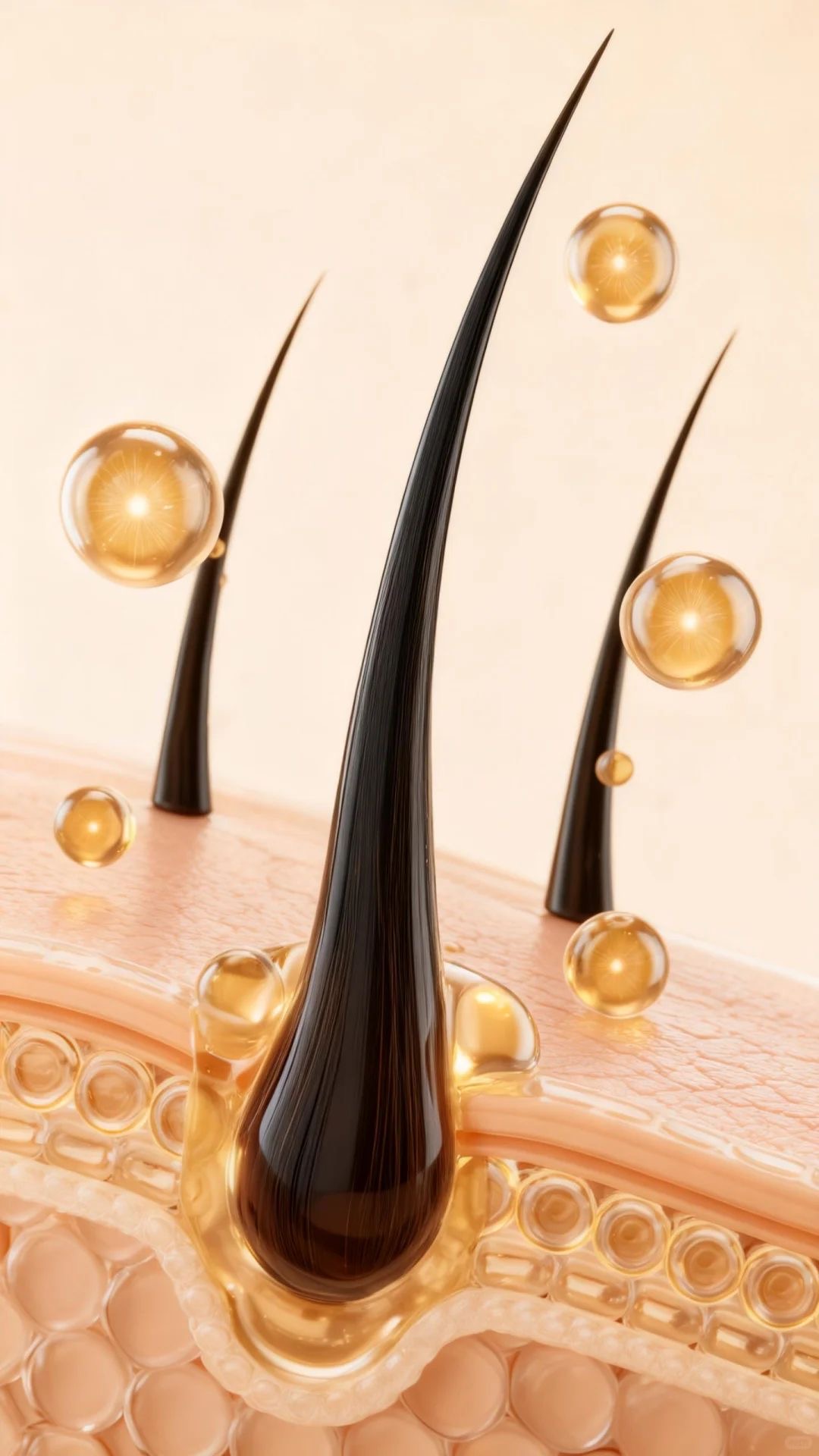
Its main objective is to act on existing follicles to support their growth cycle.
Unlike a hair transplant in Nice, Minoxidil does not create new follicles and does not replace permanently lost hair.
Its role is primarily to act on existing hair, especially when it begins to progressively thin.
This is a crucial difference that patients must understand before starting treatment.
3. Why do results vary so much from patient to patient?
One of the main reasons for Minoxidil's popularity is that some patients do indeed observe a visible improvement in their hair density.
However, not all patients respond to the treatment in the same way.
Results depend notably on:
- the stage of alopecia
- the duration of hair loss
- the quality of the remaining follicles
- the consistency of treatment
- individual genetic factors
The more advanced the alopecia, the more limited Minoxidil's results generally become.
It is often at this stage that patients begin to consider a hair transplant in Nice.
4. Can Minoxidil replace a hair transplant?
This is likely the most common question.
The answer is generally no.
When an area has been completely bald for several years, it often means that the follicles have disappeared or become inactive.
In this situation, Minoxidil cannot regrow missing follicles.
This is precisely where a hair transplant comes in.
A hair transplant in Nice involves extracting living follicles from the donor area and reimplanting them into areas that have lost density.
Minoxidil and hair transplantation therefore serve two different purposes:
- Minoxidil acts on existing hair
- transplantation helps recreate density where hair has been lost
5. Why we often recommend Minoxidil as a complement to hair transplantation
At Hexagone Clinic, we often consider Minoxidil to be a beneficial complement in certain situations.
The goal is not to act on the transplanted hair itself, but rather on the natural hair surrounding the treated areas.
Indeed, after a hair transplant in Nice, non-transplanted hair naturally continues its evolution.
Minoxidil can then be considered for:
- supporting existing hair
- slowing down its miniaturization
- preserving remaining natural density
- supporting the overall hair strategy
This approach often leads to a more harmonious long-term outcome.
6. Spray or Tablet: What are the differences?
Today, Minoxidil primarily comes in two forms.
a. Minoxidil spray
This is the most well-known form.
The product is applied directly to the scalp, usually once or twice a day as per medical recommendations.
Its advantages:
- topical application
- targeted treatment
- widespread use
- extensive track record of use
Its limitations:
- cumbersome daily application
- risk of forgetting
- scalp irritation in some patients
- results depend on consistent use
Unfortunately, many patients discontinue treatment after several months due to this daily burden.
b. Oral Minoxidil
Oral Minoxidil is increasingly used today in certain specific situations under medical supervision.
This form offers several advantages:
- no daily scalp application
- better treatment adherence
- ease of use
However, like any oral treatment, it requires a prior medical evaluation to ensure it is suitable for the patient's profile.
The choice between spray and tablet always depends on a personalized evaluation.
7. Why do some patients stop using Minoxidil?
Minoxidil requires one essential quality: consistency.
Unlike a hair transplant which produces lasting results, Minoxidil generally requires continuous use to maintain its effects.
When treatment is stopped, the hair that benefited from its action may gradually return to its initial state.
This is one of the reasons why some patients ultimately decide to consider a hair transplant in Nice, especially when they are looking for a more lasting solution.
8. Is Minoxidil suitable for women?
Yes.
Minoxidil can also be used by some women experiencing hair density loss.
As with men, its suitability depends on:
- the origin of the hair loss
- the type of alopecia
- the condition of the follicles
- the desired outcomes
A personalized evaluation remains essential before any prescription.
9. Why a diagnosis remains essential before starting treatment
Today, many patients start Minoxidil after reading advice on the internet or social media.
However, not all hair loss is the same.
Before starting any treatment, it is essential to identify:
- the type of alopecia
- its progression
- the scalp quality
- hair density
- the stability of hair loss
At Hexagone Clinic in Nice, the hair assessment provides this comprehensive overview before developing a personalized strategy.
10. Hexagone Clinic: A Comprehensive Approach to Hair Health
At Hexagone Clinic, Dr. Claire Sabatier-Cabrol and Dr. Henry Sabatier favor an individualized approach.
The goal is not to systematically propose a transplant or a medical treatment, but to build a coherent strategy based on:
- the patient's age
- their alopecia
- their donor area
- their expectations
- its future progression
Minoxidil can then find its place in this strategy, often as a complement, but rarely as the sole solution for advanced hair loss.
Frequently Asked Questions (FAQ)
Does Minoxidil regrow hair?
It can help some active follicles, but it does not recreate follicles that have permanently disappeared.
Can Minoxidil replace a hair transplant?
No. When an area is completely bald, a hair transplant generally remains the only solution to restore density.
Should I continue Minoxidil after a hair transplant?
In some cases, yes. It can be used to support existing non-transplanted hair and preserve existing density.
What is the difference between spray and oral Minoxidil?
The spray is applied directly to the scalp, while oral Minoxidil is taken as a tablet, always under medical supervision.
In conclusion
Minoxidil remains one of the most well-known treatments for hair loss today. Used correctly, it can support existing hair and contribute to an overall hair strategy.
However, it should not be considered a direct alternative to a hair transplant in Nice when follicles have disappeared. In many cases, its main benefit is complementary, particularly for preserving natural hair around transplanted areas and supporting long-term results.
📞 Feel free to contact us for a consultation and start your journey to renewed hair!