






1. Minoxidil: one of the most well-known hair loss treatments
When a patient starts losing their hair, the name of Minoxidil comes up very quickly. Available in various forms, this treatment is now one of the most commonly used solutions to address certain types of hair loss, in both men and women.
However, many questions frequently arise during consultations:
- Does Minoxidil really work?
- Can it replace a hair transplant?
- Should Minoxidil be continued after a hair transplant?
- Is there a difference between the spray and the tablets?
At Hexagone Clinic in Nice, Minoxidil is one of the treatments regularly discussed during hair assessments, especially as part of a comprehensive strategy for hair transplant in Nice.
2. What is Minoxidil?
Minoxidil is a treatment used to address certain forms of hair loss, primarily androgenetic alopecia.
Originally, this molecule was used in a completely different medical field before its effects on hair growth were observed.
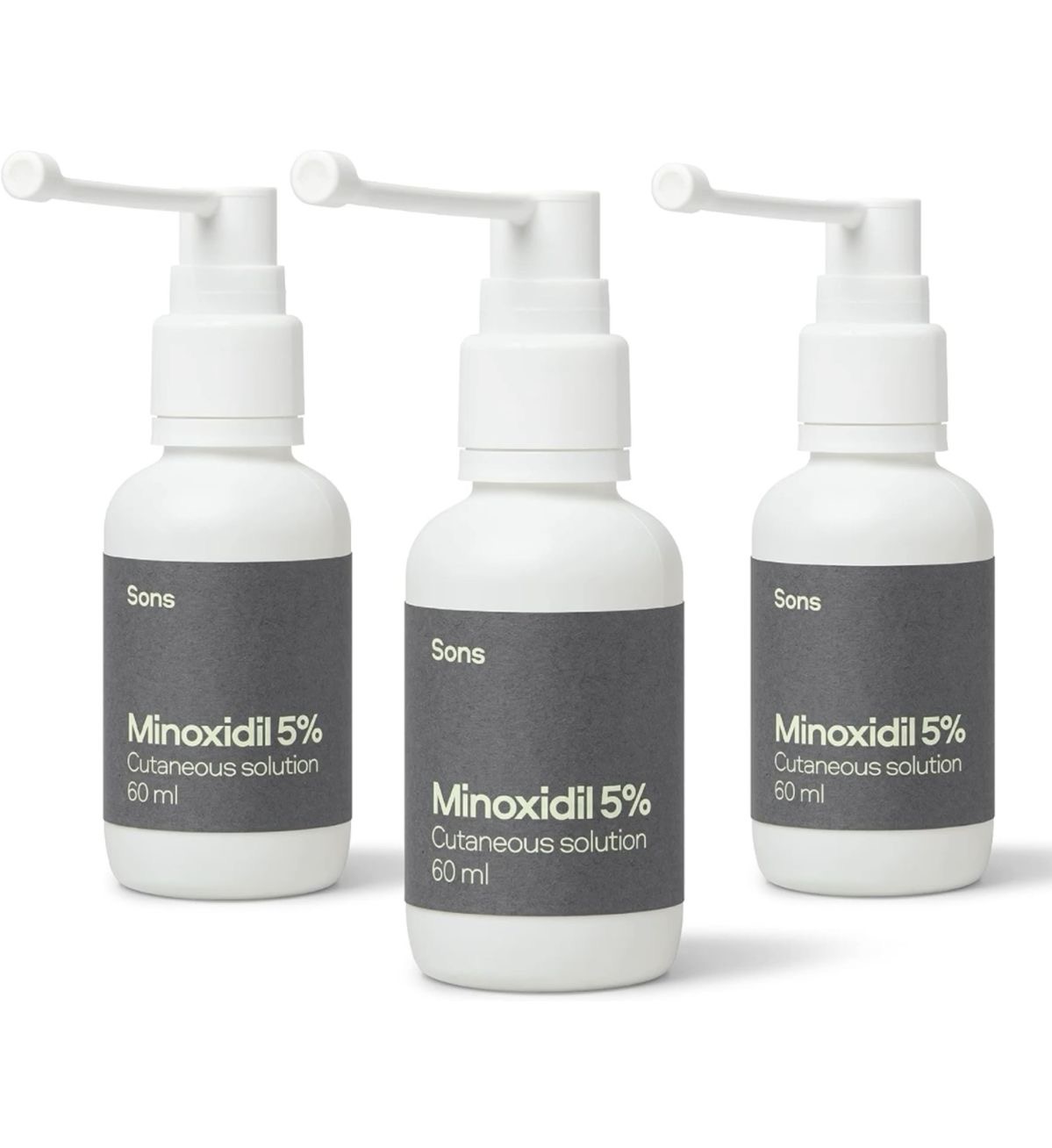
Today, Minoxidil is primarily available in two forms:
- as a topical application (spray or foam)
- as an oral treatment by medical prescription in certain cases
The choice always depends on the patient's profile and medical advice.
3. Can Minoxidil regrow hair?
Minoxidil can help some existing but weakened hairs.
It primarily acts on follicles that have not completely disappeared.
However, when an area has been completely bald for a long time, Minoxidil alone generally cannot restore full density.
This is where a hair transplant in Nice may sometimes be considered, depending on the patient's situation.
4. Why do some patients use Minoxidil before a hair transplant?
Minoxidil is sometimes used before a transplant to support existing hair.
The goal may be to:
- slow down certain hair loss
- improve the quality of miniaturized hair
- stabilize the hair condition
- better prepare for a future transplant strategy
Each patient is different and requires a personalized evaluation.
5. Should Minoxidil be stopped before a hair transplant?
Yes, in most cases, Minoxidil spray or foam should be discontinued a few days before the procedure, according to the clinic's recommendations.
This precaution helps to properly prepare the scalp before the hair transplant in Nice.
However, some oral treatments may sometimes be continued at the doctor's discretion.
Instructions always remain personalized.
6. Can Minoxidil be resumed after the transplant?
Yes, in some cases.
After a hair transplant, Minoxidil may sometimes be gradually reintroduced to support non-transplanted hair and the overall stabilization strategy.
However, the timing of resumption depends on:
- healing
- scalp sensitivity
- the recommended protocol
- the patient's hair condition
It is therefore important to follow the instructions given after the procedure.
7. Does Minoxidil provide immediate results?
No.
Like most hair treatments, Minoxidil requires time and consistency.
Patients generally have to wait several weeks or months before observing a visible improvement.
At the beginning of treatment, some patients may even experience temporary hair shedding: this phenomenon is often transient.
8. Spray or tablets: what are the differences?
Topical Minoxidil (spray or foam) remains the most well-known form.
It is applied directly to the scalp.
Oral Minoxidil, on the other hand, is sometimes prescribed in specific situations under medical supervision.
The choice depends particularly on:
- the type of alopecia
- patient tolerance
- the desired outcomes
- medical history
Medical advice is essential before starting any treatment.
9. Does Minoxidil replace a hair transplant?
No.
Minoxidil and hair transplantation do not serve exactly the same purpose.
Medical treatment primarily acts on existing hair, while hair transplant in Nice allows for the re-implantation of follicles in balding areas.
In many cases, both approaches can be complementary.
10. Why are patients increasingly interested in complementary treatments?
Today, patients are seeking a more holistic approach to their hair health.
They wish to:
- preserve their existing hair
- slow down the progression of loss
- optimize their hair transplant
- improve the overall quality of their hair
Minoxidil is therefore one of the treatments frequently discussed during modern hair consultations.
11. Hexagone Clinic: A Personalized Hair Strategy
At Hexagone Clinic in Nice, Dr. Claire Sabatier-Cabrol and Dr. Henry Sabatier analyze each situation individually.
The consultation specifically allows for the evaluation of:
- the type of alopecia
- the stability of hair loss
- the quality of the donor area
- the potential benefit of additional treatments
- the suitability of a hair transplant
The goal is always to offer a consistent and tailored long-term strategy.
Frequently Asked Questions (FAQ)
Does Minoxidil really work?
Yes, for some patients, especially when the follicles are still active.
Can Minoxidil replace a hair transplant?
No, especially when the areas are completely bald.
Should Minoxidil be stopped before a hair transplant?
Yes, topical Minoxidil should generally be stopped before the procedure, according to medical recommendations.
Can Minoxidil be resumed after the transplant?
Yes, in some cases and according to post-transplant instructions.
In conclusion
The Minoxidil remains today one of the most well-known treatments for certain types of hair loss.
Without replacing a hair transplant in Nice when necessary, it can be part of a broader strategy aimed at preserving existing hair and supporting long-term hair development.
📞 Feel free to contact us for a consultation and start your journey towards renewed hair!