






1. Still having hair doesn't mean your hair is intact
When talking about hair transplant in Nice, many people immediately imagine very advanced baldness or an almost completely bare scalp.
However, the reality is quite different.
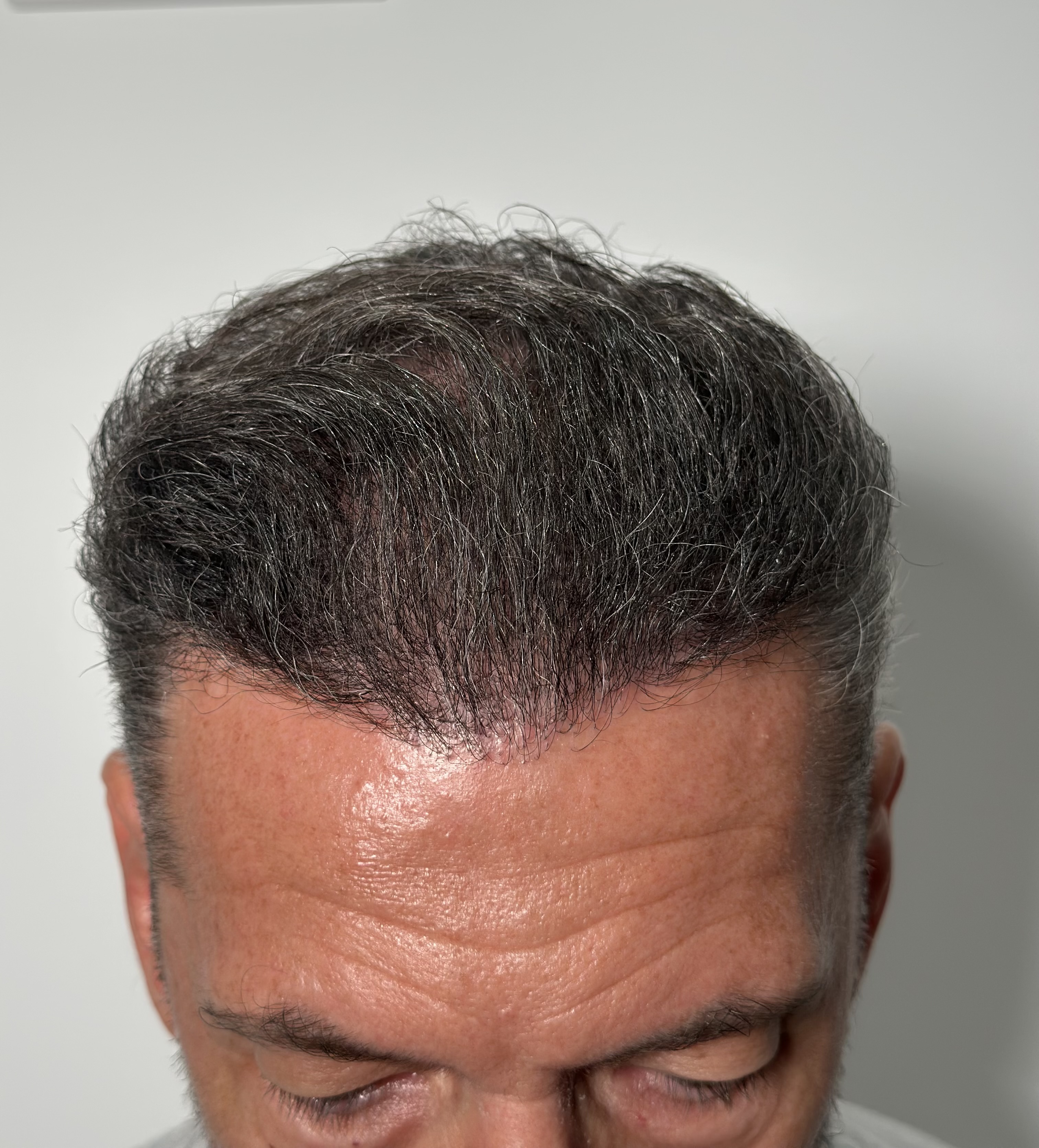
Today, a large number of patients who consult a specialized clinic still have relatively full hair. They are not bald, but they notice that their hair is gradually changing: it becomes finer, less dense, and the scalp starts to show under certain lighting.
This progression is often subtle at first, but it can have a real impact on self-confidence.
At Hexagone Clinic in Nice, it's common to see patients who wonder if it's 'too early' to consult. The answer is often no. A consultation doesn't mean a transplant will be performed, but it helps to understand precisely the progression of hair loss and what the most suitable solutions are.
2. Loss of density is often the first sign of alopecia
Contrary to popular belief, alopecia doesn't always start with a receding hairline or a completely bare crown.
For many patients, the first signs are much more subtle.
Progressively, we observe:
🔹 a decrease in hair volume;
🔹 hair becoming finer;
🔹 hair that holds its style less well;
🔹 a scalp that is more visible under strong light;
🔹 a feeling that hair provides less coverage than before.
This phase is called miniaturization. The follicles still produce hair, but it gradually becomes thinner and shorter.
It's often at this point that patients start looking for information about a hair transplant in Nice, without knowing if they are truly affected.
3. Why do some areas appear thinner even though there is still hair?
The impression of lacking density doesn't solely depend on the number of hairs.
It is influenced by several factors:
🔹 the diameter of each hair;
🔹 hair color;
🔹 the contrast with the scalp;
🔹 texture (straight, wavy, or curly hair);
🔹 the distribution of follicles.
Two people can have exactly the same number of hairs per square centimeter while giving a completely different visual impression.
This is why a simple mirror observation isn't always enough to assess the extent of hair loss.
4. Hair transplantation isn't just for recreating a full head of hair
Many patients believe that hair transplantation is reserved for completely bald individuals.
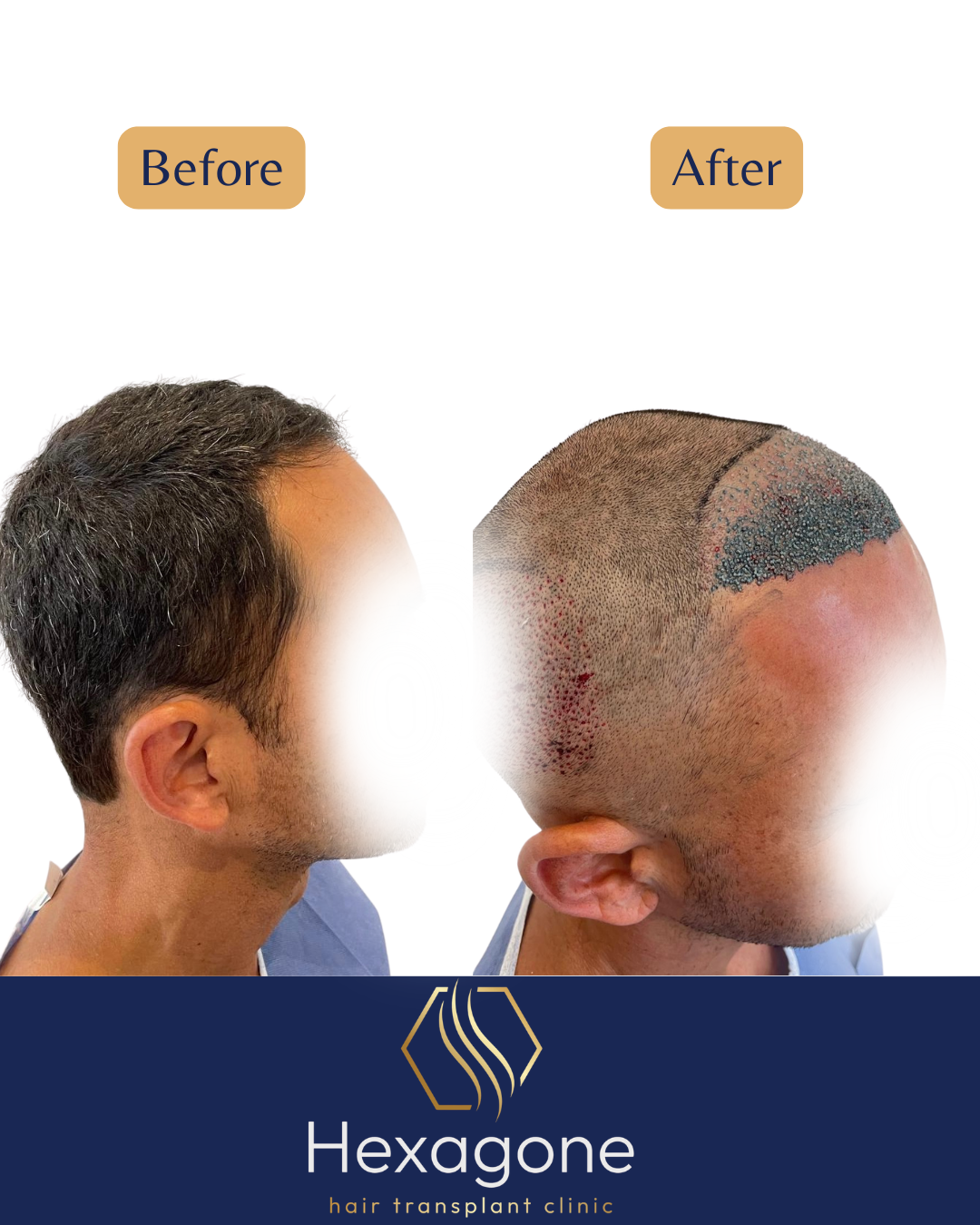
In reality, its purpose can also be to densification.
When an area gradually starts to lose density but hair is still present, it is sometimes possible to improve the visual appearance by adding additional follicles between the existing hairs.
The most frequently affected areas are:
🔹 the frontal receding hairline;
🔹 the frontal hairline;
🔹 the mid-scalp;
🔹 certain diffuse areas in women.
The goal is not to completely transform the hair, but to achieve a harmonious and natural result.
5. Why it's sometimes better to consult before hair loss becomes too significant
Many patients postpone their first consultation because they believe they "still have enough hair."
However, waiting several years is not always the best strategy.
The more hair loss progresses, the more difficult it becomes to organize a coherent long-term management plan.
Consulting early allows for:
🔹 precisely assessing the progression of alopecia;
🔹 analyzing the quality of the donor area;
🔹 measuring hair density;
🔹 determining whether an intervention is indicated or not;
🔹 considering different solutions tailored to the patient's situation.
In some cases, no transplant is recommended. In others, it may be preferable to intervene before certain areas become completely bald.
6. Why an accurate diagnosis is essential
Two patients with similar hair loss will not necessarily receive the same recommendations.
Before any decision, several factors must be considered:
🔹 the origin of hair loss;
🔹 the progression of alopecia;
🔹 the quality of remaining follicles;
🔹 the density of the donor area;
🔹 the patient's expectations.
At Hexagone Clinic, this analysis is performed during a personalized consultation including a clinical examination and scalp analysis using a 3D hair scanner.
This tool allows for precise observation of hair density, miniaturization, and the quality of the donor area, to develop a truly tailored strategy.
7. Not all patients experiencing hair loss are candidates for a transplant
This is a crucial point.
Hair loss can have various origins:
🔹 androgenetic alopecia;
🔹 reactive hair loss;
🔹 a hormonal imbalance;
🔹 certain deficiencies;
🔹 a scalp condition.
In some situations, a hair transplant is not immediately indicated.
The very purpose of the consultation is to understand the cause of hair loss before proposing a solution.
This approach helps avoid unnecessary procedures and offers the patient personalized care.
8. The consultation: a key step before any hair transplant
Today, a hair transplant in Nice is no longer just a simple technical procedure.
It begins with a thorough analysis phase.
At Hexagone Clinic, the consultation notably allows for:
🔹 listening to the patient's expectations;
🔹 assessing the stability of the alopecia;
🔹 analyzing the donor area;
🔹 observing areas with density loss;
🔹 building a coherent long-term hair project.
This step is essential because each patient has a different hair history and deserves a personalized strategy.
Frequently Asked Questions (FAQ)
Can a hair transplant be performed if one still has a lot of hair?
Yes. A transplant can be considered for patients who primarily experience density loss or hair miniaturization, provided the indication is validated during the consultation.
Does hair thinning necessarily mean I'm going bald?
Not necessarily. The progression depends on many factors, including the cause of the hair loss and how it develops.
How can I tell if my hair is truly thinning?
A clinical examination, supplemented by a hair scan, can accurately assess hair density and quality.
Is it advisable to consult at the first signs?
Yes. An early consultation helps understand the cause of hair loss and anticipate the various options before the alopecia progresses further.
In conclusion
The hair transplant in Nice is not only for people with advanced baldness. Many patients seek consultation even when they still have relatively dense hair, but observe a progressive loss of volume or a decrease in hair quality.
Understanding this progression is essential for implementing an appropriate strategy. Through a personalized consultation, a clinical examination, and a 3D hair scan analysis of the scalp, it is possible to precisely assess each patient's situation and determine if a hair transplant is the best solution or if another approach is more appropriate.